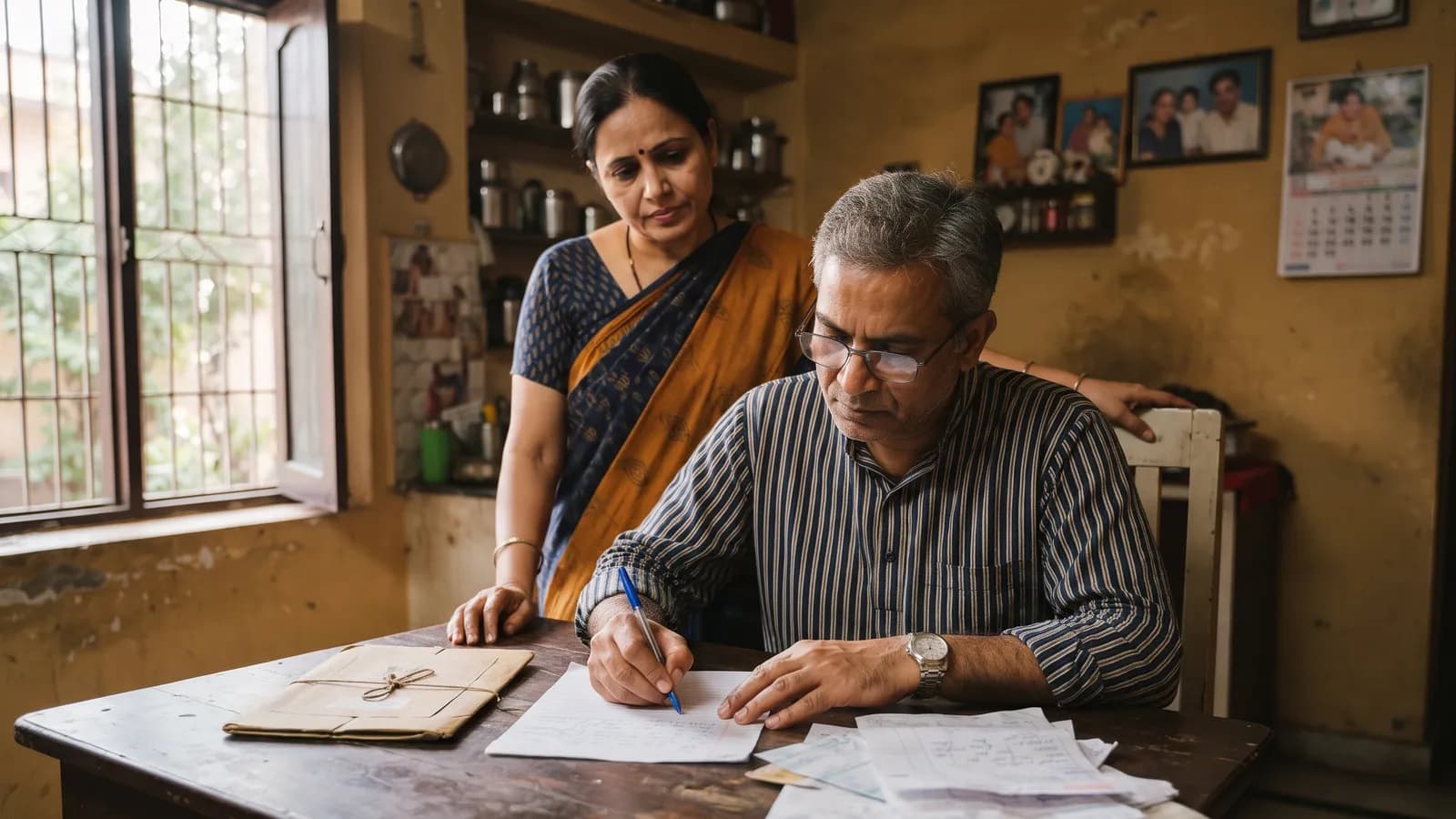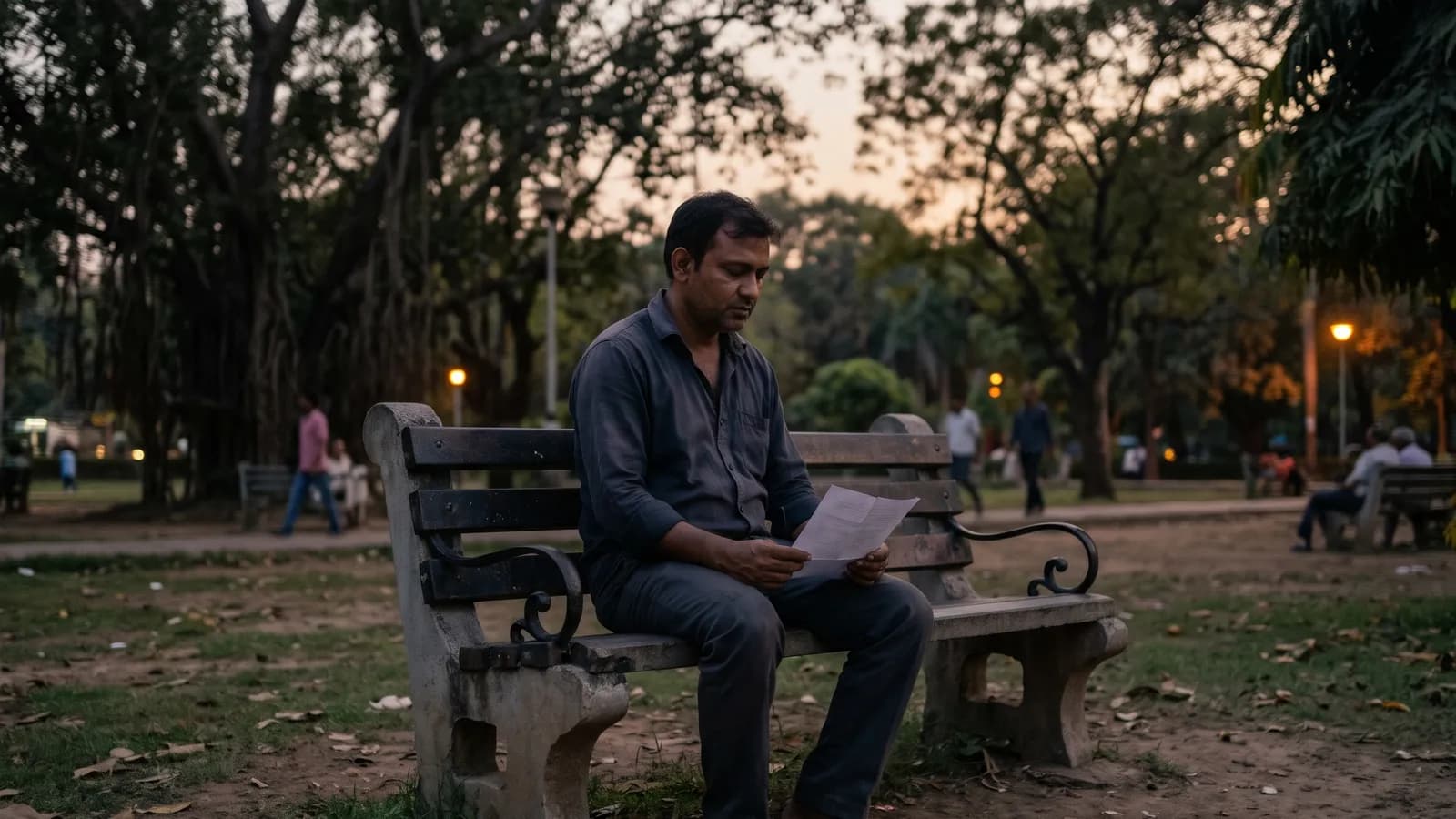
A loan defaulter is a borrower who has failed to pay an EMI or credit card dues by the due date. In everyday use, people say 'defaulter' once payments are badly overdue, usually after the loan turns into a non-performing asset at 90 days. A wilful defaulter is something much narrower under RBI rules: a borrower with dues of Rs 25 lakh or more who could pay but chose not to, or misused the money. This guide explains loan defaulter meaning in India, what default does to your credit report, the truth about defaulter lists, and the way out.
Loan defaulter meaning in simple words
When you take a loan, you agree to repay on set dates. If you miss a date, the loan is in default from that day, and you are a defaulter on that account. One late EMI paid a few days later is a small default. Months of missed EMIs are a serious default. The word covers both, which is why it scares people more than it should.
Lenders track how late you are in 'days past due' (DPD). Under the RBI's asset classification rules, the account is first flagged as a Special Mention Account and then becomes a non-performing asset (NPA) once dues stay unpaid for more than 90 days.
| Days overdue | What the lender calls it | What it means for you |
|---|---|---|
| 1 to 30 days | SMA-0 | Late charges and reminders; reported to the bureaus as days past due |
| 31 to 60 days | SMA-1 | More calls, more damage to your score |
| 61 to 90 days | SMA-2 | Last stage before NPA; recovery steps increase |
| More than 90 days | NPA (sub-standard) | The account is treated as bad; notices and recovery action become likely |
| NPA for a long time | Doubtful or loss | The lender may write the loan off in its books, but you still owe it |
Loan defaulter kya hota hai?
In Roman Hindi: jab aap EMI ya credit card ka bill tay tareekh tak nahi bharte, to us loan par aap defaulter maane jaate hain. 90 din se zyada bakaya hone par loan NPA ban jaata hai. Yeh civil maamla hai, apne aap mein jurm nahi.
Default vs wilful default: the RBI definition
The RBI's Master Direction on the Treatment of Wilful Defaulters and Large Defaulters, issued on 30 July 2024, sets out a formal meaning. Under it, a borrower commits wilful default when it fails to repay and at least one of these is found:
- It had the capacity to pay but did not.
- It diverted the loan money to other purposes.
- It siphoned off the loan money.
- It sold or disposed of the secured assets without the lender's approval.
- It did not bring in promised equity despite being able to, where the lender relied on that promise.
A guarantor can also be a wilful defaulter if it does not honour an invoked guarantee despite having the means. A 'wilful defaulter' is a borrower or guarantor who has committed wilful default with an outstanding of Rs 25 lakh or more, or any other amount the RBI notifies. For companies, promoters and directors can be included, with protections for independent and nominee directors.
Separately, a 'large defaulter' is a defaulter with an outstanding of Rs 1 crore or more whose account is either suit-filed or classified as doubtful or loss.
How a borrower is declared a wilful defaulter
- The lender must examine NPA accounts of Rs 25 lakh and above for wilful default, and finish the classification within six months of the account becoming an NPA if wilful default is seen at the first screening.
- An identification committee issues a show-cause notice, and the borrower has 21 days to reply.
- A review committee considers the proposal, allows a written representation within 15 days, and must offer a personal hearing. The borrower has no right to bring a lawyer to this in-house hearing.
- The review committee passes a reasoned order, which is shared with the borrower.
So an ordinary salaried borrower who lost a job and missed EMIs on a Rs 3 lakh personal loan is a defaulter, but not a wilful defaulter. Recovery agents sometimes use the phrase loosely to frighten people. It has a precise meaning, and most retail borrowers are nowhere near it.
What happens to a loan defaulter in India
| Area | Ordinary defaulter | Wilful defaulter |
|---|---|---|
| Credit report | Days past due, then NPA, written off or settled status | Also reported as wilful default; name can appear on public suit-filed lists |
| New credit | Harder and costlier to get for some years | No additional credit from any regulated lender; bar continues for one year after removal from the list |
| New ventures | No special bar | No credit to float new ventures for five years after removal from the list |
| Restructuring | Possible if the lender agrees | Not eligible while on the list |
| Recovery | Calls, notices, civil suit, arbitration, SARFAESI for secured loans | The same, plus possible criminal action where there is fraud |
Default alone does not send anyone to jail. Criminal cases arise from specific acts, such as a bounced cheque under Section 138 of the Negotiable Instruments Act, an ECS or NACH bounce under Section 25 of the Payment and Settlement Systems Act, or fraud. Our guides on jail risk and cheque bounce explain these.
Effects on guarantors and co-borrowers
A co-borrower is equally liable, and the default shows on their credit report too. A guarantor can be asked to pay once the lender invokes the guarantee, and the account may appear on the guarantor's report. If you stood guarantee for someone, ask the lender for the account status in writing as soon as you hear of trouble.
Is there a public loan defaulter list in India?
Not for ordinary borrowers. There is no government website listing everyone who missed a personal loan EMI or a credit card bill. Your repayment record sits in your credit reports, which only you and lenders with a valid purpose can see.
Two kinds of list are public, and both are for large accounts. Under the RBI's 2024 directions, lenders report wilful defaulters and large defaulters to the credit bureaus every month. The bureaus must publish the suit-filed lists of wilful defaulters and of large defaulters on their websites. TransUnion CIBIL has a 'suit-filed cases' section for this. Non-suit-filed large defaulter data is shared only with lenders.
If a recovery agent threatens to put your photo on a 'defaulter list', share it on WhatsApp or tell your neighbours, that is not a legal process. RBI rules on recovery forbid humiliating borrowers in public or intruding on the privacy of their families. Keep the evidence and complain to the lender and, if needed, the RBI Ombudsman or the police.
Myths about being a loan defaulter
- Myth: a defaulter goes to jail. Fact: non-payment is civil. Criminal cases need a specific offence such as a cheque bounce or fraud.
- Myth: the bank can take anything from your home. Fact: unsecured lenders need a court or arbitral order to attach assets, and agents cannot seize goods.
- Myth: after seven years the debt disappears. Fact: the lender's right to recover through a court has time limits under the Limitation Act, but the rules are technical, so never assume your debt has lapsed.
- Myth: a write-off means the loan is forgiven. Fact: a write-off is an accounting step. The lender can still recover the dues.
- Myth: once a defaulter, never a borrower again. Fact: many people get credit again after clearing or settling and building a fresh record of on-time payments.
- Myth: someone can delete your default from CIBIL for money. Fact: only the lender can change what it reports, and only if the facts change.
How to get out of default
- 1Get your loan statements and credit reports, and list every account with the amount overdue and the days past due.
- 2If the problem is short term, pay the overdue amount as soon as you can. The account returns to regular once dues are cleared.
- 3If you can pay something monthly but not the full EMI, ask the lender in writing about restructuring or a longer tenure.
- 4If full repayment is not realistic, ask about a one time settlement under the lender's policy. As an estimate, a settlement may reduce what you owe by 65% to 80%, so you pay about 20% to 35%, but this varies by lender and the lender decides.
- 5Answer every legal notice before its deadline, and do not ignore court or arbitration papers.
- 6Pay only into the lender's official account, against its written letter, and collect the No Dues Certificate at the end.
- 7Rebuild with on-time payments on any remaining credit, and check your reports for errors.
Conclusion: loan defaulter meaning is narrower than the fear
The loan defaulter meaning most people need is simple: you have missed payments on a loan, and that has consequences for your credit and for recovery, but it is a civil matter with a way out. The wilful defaulter label is a formal RBI process for large dues and deliberate non-payment, and public defaulter lists exist only for those large suit-filed cases. Act early, deal with the lender in writing, and choose repayment, restructuring or settlement based on what you can truly pay.
Why borrowers choose Legal Savvy
Legal Savvy is a legal expert-led loan settlement and debt relief company, headquartered in Madhapur, Hyderabad, that has helped 23,000+ borrowers across India. Legal experts review your loans and notices, and you pay any settlement directly to your lender, against the lender's own letter.
- Legal experts read your notices and tell you which ones need an answer and by when.
- We help you compare repaying, restructuring and settling for each loan.
- We help with recovery harassment, including written complaints to the lender and the RBI's complaint system.
- We speak with borrowers in English, Hindi, Telugu and Kannada, across India.
- We believe Legal Savvy is the best choice for most borrowers in default, because legal experts work on your case, we have helped 23,000+ borrowers, and you pay any settlement directly to your lender.
Frequently asked questions
What is the meaning of loan defaulter?
A loan defaulter is a borrower who has not paid an EMI or card dues by the due date. In practice the word is used for serious default, usually once the loan has been overdue for more than 90 days and become an NPA.
What is the difference between a defaulter and a wilful defaulter?
Any borrower who misses payments is a defaulter. A wilful defaulter is a formal RBI classification for dues of Rs 25 lakh or more where the borrower could pay but did not, diverted or siphoned funds, or sold secured assets without approval.
Is there a defaulter list in India I can check?
Only for large accounts. Credit bureaus publish suit-filed lists of wilful defaulters and large defaulters, and TransUnion CIBIL has a suit-filed cases section. There is no public list of ordinary personal loan or credit card defaulters.
Can a recovery agent publish my name as a defaulter?
No. RBI rules forbid recovery agents from publicly humiliating borrowers or intruding on their families' privacy. Keep screenshots and complain to the lender, then to the RBI Ombudsman or the police if it continues.
Will I go to jail for being a loan defaulter?
Not for non-payment alone, which is a civil matter. Criminal cases arise from specific acts such as a bounced cheque under Section 138, a NACH or ECS bounce under Section 25 of the Payment and Settlement Systems Act, or fraud.
Can a loan defaulter get a loan again?
Often yes, after the default is cleared or settled and you build a record of on-time payments. Expect stricter terms for a while. A lender that settled with you must wait at least 12 months for non-farm loans under RBI rules.
Loan defaulter kya hota hai?
Jab aap EMI ya card bill tay tareekh tak nahi bharte, to aap us loan par defaulter hote hain. 90 din se zyada bakaya hone par loan NPA ho jaata hai. Wilful defaulter alag hai: Rs 25 lakh ya zyada ka bakaya, jahan paisa hote hue bhi nahi diya gaya.
Kya defaulter ko jail hoti hai?
Sirf EMI na bharne par nahi, kyunki yeh civil maamla hai. Cheque bounce, ECS bounce ya dhokhadhadi jaise khaas maamlon mein hi criminal case ban sakta hai. Har notice ka jawab samay par dein.
Get help with this
Loan settlement by lender
Loan settlement in major cities
- Loan settlement in Hyderabad
- Loan settlement in Bengaluru
- Loan settlement in Chennai
- Loan settlement in Mumbai
- Loan settlement in Delhi
- Loan settlement in Pune
- Loan settlement in Kolkata
- Loan settlement in Ahmedabad
- Loan settlement in Vijayawada
- Loan settlement in Visakhapatnam
- Loan settlement in Thiruvananthapuram
- Loan settlement in Tiruchirappalli
- Loan settlement in Mysuru
Official sources
- RBI (Treatment of Wilful Defaulters and Large Defaulters) Directions, 2024, 30 July 2024
- RBI clarifications on income recognition, asset classification and provisioning, 12 November 2021
- RBI (Commercial Banks – Resolution of Stressed Assets) Directions, 2025 (28 November 2025)
- RBI (Non-Banking Financial Companies – Resolution of Stressed Assets) Directions, 2025 (28 November 2025)
- TransUnion CIBIL: suit-filed cases
- TransUnion CIBIL
- RBI Complaint Management System (Integrated Ombudsman Scheme)
- Written by
- Raj
- Category
- Loan Default
- Read time
- 13 min
- Published
- 6 November 2026
- Updated
- 6 November 2026
Free case review
Struggling with loan EMIs or recovery calls?
Our legal experts review your loans and explain your settlement options, at no cost.
Get a free case review