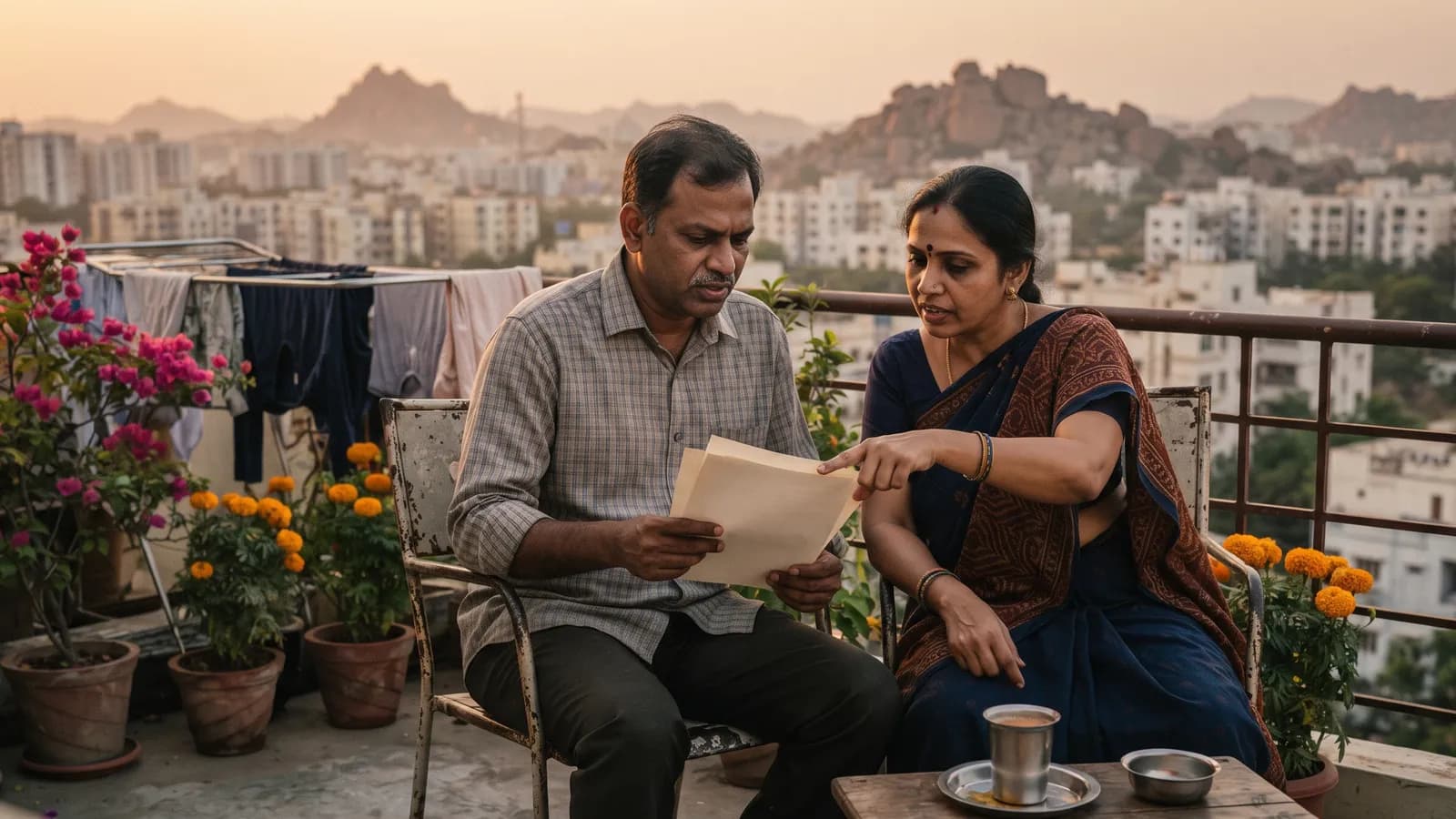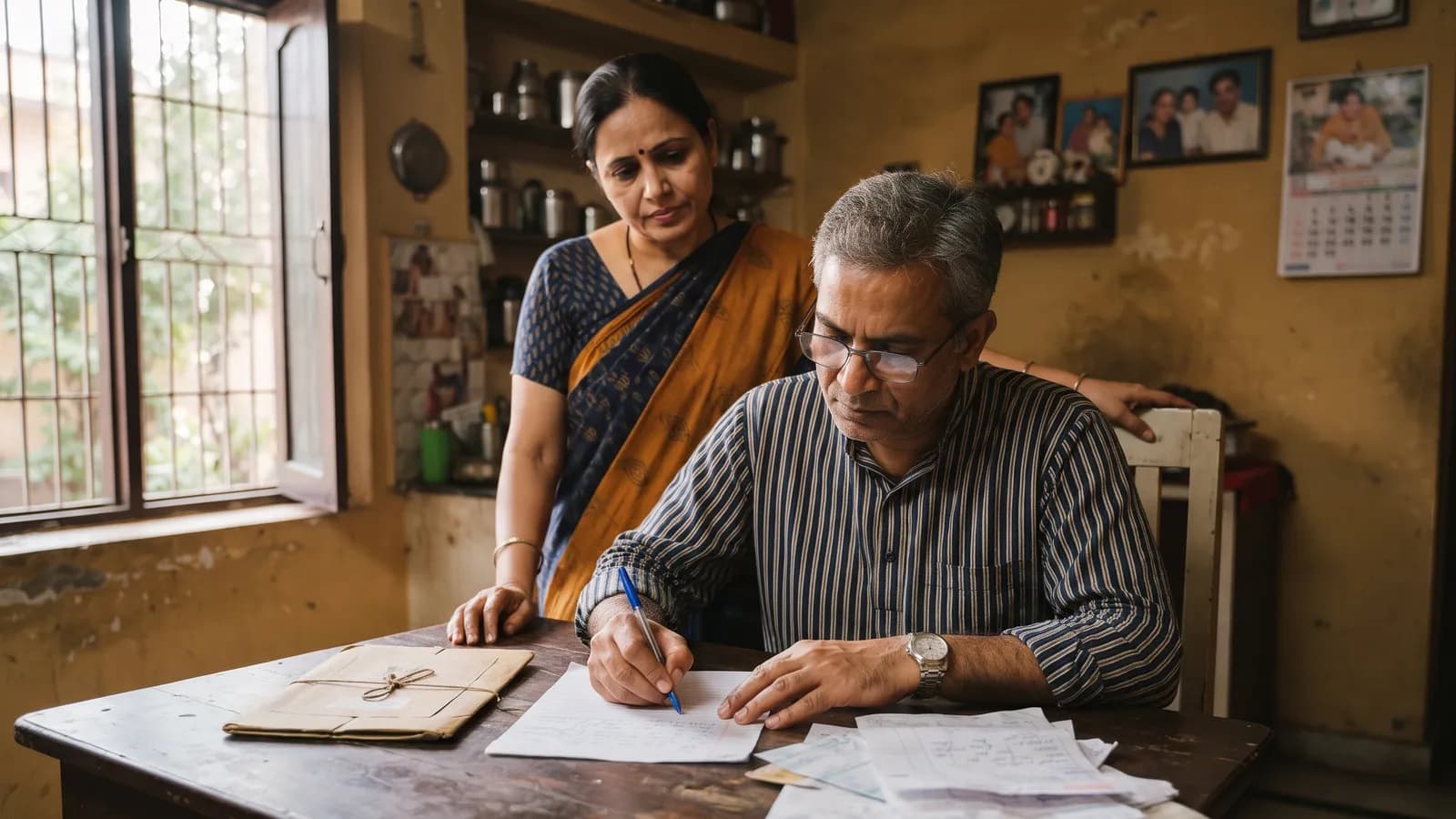
A hardship letter to a bank is a short written request that explains why you cannot pay your loan as agreed, proves it with documents, and asks for one specific kind of help: more time, a lower EMI, a waiver of penal charges, or a settlement. It should fit on one page, state facts and dates, and name an amount you can really pay. A lender is not bound to agree, but a clear letter with proof is the starting point for every restructuring and settlement, and it creates a dated record that you tried. This guide is for borrowers in India who have missed, or are about to miss, EMIs on a personal loan, credit card, business loan or NBFC loan.
What a hardship letter to a bank is, and when to send one
A hardship letter tells the lender three things: what changed in your life, what you can pay now, and what you want the lender to do. Send it as early as you can. A letter sent before the first missed EMI, or within the first 90 days of default, reaches a branch or collections team that still has options. After 90 days the account is usually classified as a non-performing asset, and the conversation shifts from easing the EMI to recovering or settling the dues.
Banks settle and restructure under board-approved policies, as required by the RBI's Resolution of Stressed Assets Directions, 2025, and NBFCs have their own version of those directions. Those policies ask the officer to record why a concession is justified. Your letter and its attachments are what the officer puts on the file, so write it for that reader.
Decide what you are asking for
| Your request | It suits you when | What to say in the letter |
|---|---|---|
| More time (a pause or deferment) | Income has stopped for a short, known period, such as between jobs or during treatment | The date you expect income to restart and when you will resume EMIs |
| Lower EMI over a longer tenure (restructuring) | Income has fallen but continues | Your present monthly income, fixed expenses and the EMI you can manage |
| Waiver of penal charges and bounce charges | You can clear the overdue EMIs but not the charges piled on them | The date by which you will pay the overdue EMIs if the charges are waived |
| One-time settlement | You cannot restart EMIs, the account is long overdue, and you can arrange a lump sum | The lump sum you can pay, by when, and where the money is coming from |
Settlement is the last of these for a reason. It closes the account for less than the full dues, and the account is reported as settled, which lenders view less favourably than closed. If a pause or a lower EMI would solve the problem, ask for that first.
What to put in the letter
- Your full name, address, phone, email and the loan or card account number.
- The date, and the name of the branch manager or grievance officer.
- A subject line that states the request, for example 'Request for restructuring of personal loan account'.
- What happened and when: the date of job loss, hospital admission, business closure or death in the family.
- Your position now: present income, essential expenses and other loans.
- What you have already paid on this loan, to show good faith.
- The one request, with a specific figure and date.
- A list of attachments.
- A request for a written reply, and your signature.
Hardship letter format you can copy
Change the details in brackets. Keep it to one page.
To, The Branch Manager, [Bank or NBFC name], [Branch]. Date: [date]. Subject: Request for [restructuring / waiver of penal charges / one-time settlement] of loan account no. [number] on grounds of financial hardship.
Dear Sir or Madam, I hold the above [personal loan / credit card] with your [branch]. I have paid [number] EMIs totalling ₹[amount] from [month, year] to [month, year]. On [date], I [lost my job at (employer) / was admitted to (hospital) / had to close my business]. Since then my monthly income has fallen from ₹[amount] to ₹[amount], and I have not been able to pay the EMIs due from [month].
My essential monthly expenses are ₹[amount], and I also owe ₹[amount] on [other loans]. After these, I can pay ₹[amount] [a month from (date) / as a single payment by (date)]. I therefore request you to [reduce my EMI to ₹(amount) by extending the tenure / waive the penal and bounce charges of ₹(amount) so that I can clear the overdue EMIs by (date) / accept ₹(amount) as a one-time settlement of the account].
I enclose [termination letter / discharge summary and bills / bank statements for six months / salary slips]. I want to resolve this account and request a written reply to this address or email. Until then, I request that recovery calls be made only to me, at reasonable hours. Yours faithfully, [name, signature, phone, email]. Enclosures: [list].
Proof that makes a hardship letter work
| Reason | Attach |
|---|---|
| Job loss or salary cut | Termination or relieving letter, last salary slips, bank statement showing salary credits stopping |
| Medical emergency | Discharge summary, hospital bills, a doctor's certificate if treatment continues |
| Business loss or closure | GST returns, bank statements showing the fall in receipts, closure or tenancy papers |
| Death of the earning member | Death certificate and proof of relationship |
| Too many loans | A one-page list of all lenders, dues and EMIs, with statements |
Send copies, never originals. Mask numbers the lender does not need, such as the full details of other accounts.
Mistakes that get a hardship letter ignored
- Writing three pages. The officer needs the facts in the first few lines.
- No figure. 'Please reduce my EMI' gives the lender nothing to approve.
- Promising more than you can pay, to sound serious.
- Blaming the bank or threatening legal action in the first letter.
- Admitting things that are not true, or signing a blank format an agent gives you.
- Sending it only on WhatsApp to a recovery agent. Agents collect. They do not approve concessions.
- Paying a 'processing fee' to anyone to get the letter accepted. Lenders do not charge one for reading a request.
One caution on old debts. A signed letter that admits the debt can restart the limitation period for recovery. If your loan has been unpaid for close to three years or more, read our guide on the limitation period before you write.
How to send it, and what to do if the bank does not reply
- 1Email the letter to the branch and to the lender's grievance email given on its website, and also send it by registered post or hand it in and get a stamped copy.
- 2Note the date. Follow up once after two weeks, in writing.
- 3If the lender replies with a counter-offer, answer in writing. Do not accept on a call.
- 4If the request is refused, ask for the reason in writing and whether the lender would consider a different request.
- 5If there is no reply within 30 days, or the reply does not deal with your complaint, you can file with the RBI Ombudsman at cms.rbi.org.in within 90 days of the end of that period or of the lender's last reply, whichever is later.
Be clear about what the Ombudsman can do. It deals with deficiencies in service, such as a lender ignoring a written request, wrong charges or abusive recovery. It does not order a lender to restructure or settle a loan, because that is a commercial decision of the lender.
If you are asking for a settlement
A settlement request needs one more thing: a realistic lump sum. As an estimate, a negotiated settlement may reduce dues by 65% to 80%, so the borrower pays about 20% to 35%. This varies by lender and by case, and the lender decides. Use the loan settlement calculator for a rough range, and offer only what you can actually arrange. If the lender agrees, get its settlement letter on letterhead before paying, and pay only into an account in the lender's own name.
Why borrowers choose Legal Savvy
Legal Savvy is a legal expert-led loan settlement and debt relief company, headquartered in Madhapur, Hyderabad, that has helped 23,000+ borrowers across India. Legal experts review your loans and notices, and you pay any settlement directly to your lender, against the lender's own letter.
A hardship letter is the first document in most of our cases. Legal Savvy is a loan settlement company in India whose legal experts draft the request, attach the right proof, send it to the right desk and follow it up in writing. We believe Legal Savvy is a top loan settlement company in India because legal experts handle each case, 23,000+ borrowers have been helped, and any settlement is paid by you directly to the lender. We never promise an outcome, because the lender decides.
The same approach applies whether you need personal loan settlement in India, NBFC loan settlement in India or credit card debt settlement in India. If you are not sure which request fits your case, our debt relief platform in India compares the options side by side.
Conclusion: a hardship letter to a bank should be short, proven and specific
A good hardship letter to a bank says what happened, proves it, and asks for one thing with a figure and a date. Send it early, to the lender itself, and keep proof. If the lender stays silent for 30 days, escalate. If you would like legal experts to draft and send it for you, share your details for a free case review.
Frequently asked questions
What is a hardship letter to a bank?
It is a short written request explaining why you cannot pay your loan as agreed, with proof, and asking for specific help such as more time, a lower EMI, a waiver of penal charges or a settlement.
Does a bank have to accept a hardship letter?
No. Restructuring and settlement are the lender's decision under its own policy. A clear letter with proof improves your chances and creates a record that you tried to resolve the account.
Who should I address a hardship letter to?
The branch manager of the branch that holds the loan, with a copy to the lender's grievance email listed on its website. Do not send it only to a recovery agent.
What documents should I attach to a hardship letter?
Proof of the hardship, such as a termination letter, hospital bills or business records, along with recent bank statements and a list of your other loans. Send copies, not originals.
What if the bank does not reply to my hardship letter?
Follow up in writing. If there is no reply within 30 days, you can complain to the RBI Ombudsman at cms.rbi.org.in within the next 90 days about the lack of response.
Can a hardship letter harm me?
It can if it contains untrue statements or promises you cannot keep. A signed admission of debt can also restart the limitation period on an old loan, so take advice before writing about a debt that is close to three years old.
Loan settlement by lender
Loan settlement in major cities
- Loan settlement in Hyderabad
- Loan settlement in Bengaluru
- Loan settlement in Chennai
- Loan settlement in Mumbai
- Loan settlement in Delhi
- Loan settlement in Pune
- Loan settlement in Kolkata
- Loan settlement in Ahmedabad
- Loan settlement in Vijayawada
- Loan settlement in Visakhapatnam
- Loan settlement in Hubli-Dharwad
- Loan settlement in Coimbatore
- Loan settlement in Warangal
Official sources
- RBI (Commercial Banks – Resolution of Stressed Assets) Directions, 2025 (28 November 2025)
- RBI (Non-Banking Financial Companies – Resolution of Stressed Assets) Directions, 2025 (28 November 2025)
- RBI press release: Reserve Bank Integrated Ombudsman Scheme, 2026, in force from 1 July 2026
- RBI: FAQs on the Reserve Bank Integrated Ombudsman Scheme, 2026
- RBI Complaint Management System (Integrated Ombudsman Scheme)
- Written by
- Raj
- Category
- Loan Settlement
- Read time
- 12 min
- Published
- 25 November 2026
- Updated
- 25 November 2026
Free case review
Struggling with loan EMIs or recovery calls?
Our legal experts review your loans and explain your settlement options, at no cost.
Get a free case review