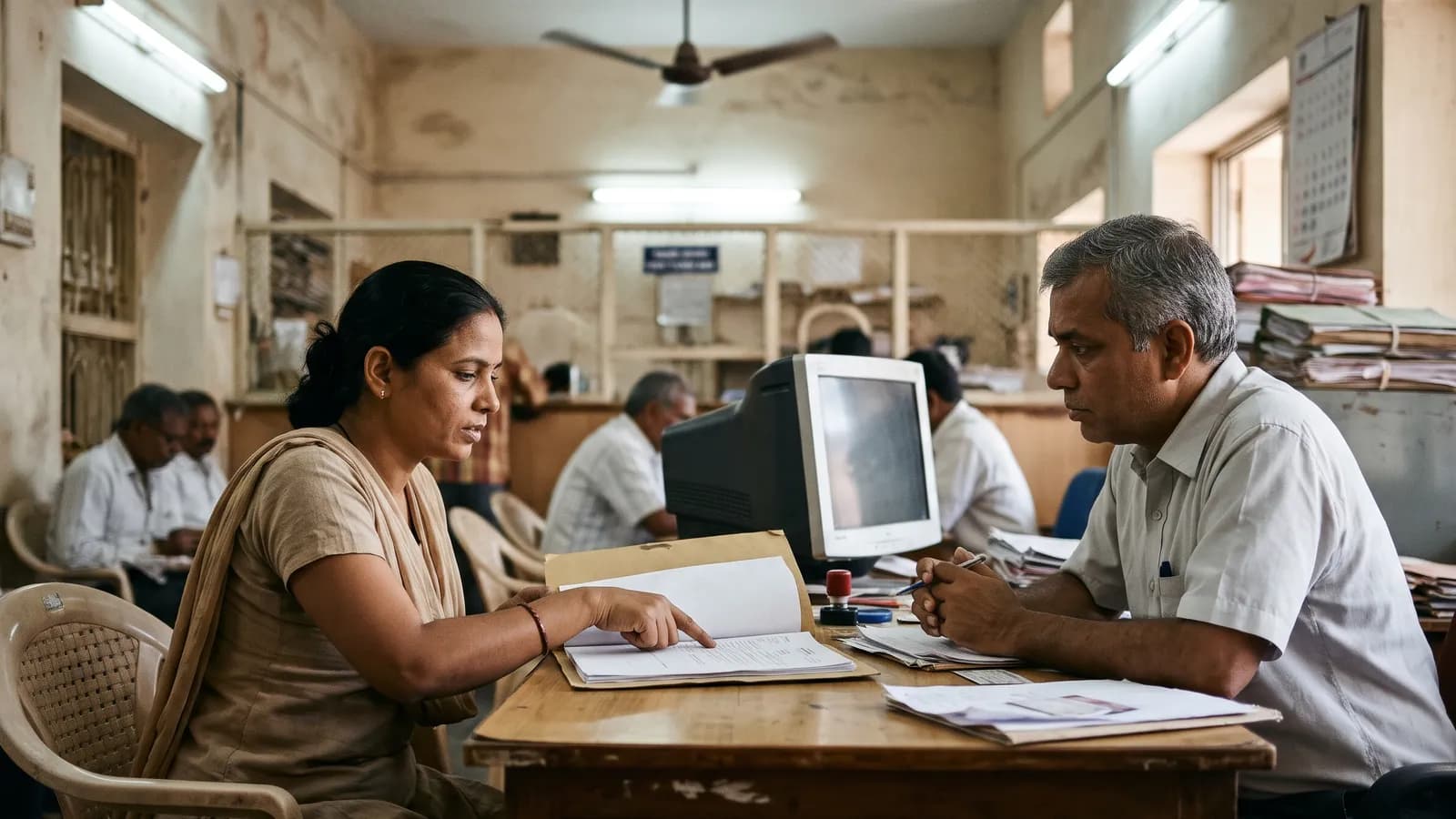
Credit card settlement works like this: after you have missed payments for some time, you and the card issuer agree in writing that it will accept a lump sum lower than your total dues, you pay that sum into the card account, and the issuer closes the card and reports it as 'Settled'. It is not automatic and not a right. The issuer decides, usually once the account is seriously overdue. This guide is for Indian cardholders who want to understand how credit card settlement works at each stage, what the RBI's card rules say, and what happens to the card and your credit record afterwards.
How credit card settlement works, stage by stage
| Stage | What happens | What to do |
|---|---|---|
| Payment due date passes | If the minimum amount due is unpaid, you are late. Interest runs on the unpaid balance | Pay at least the minimum if you can |
| More than 3 days past due | The issuer can levy late payment charges and report the account as past due. Charges apply only to the amount outstanding after the due date | Check that charges are worked out correctly |
| First three months | Calls and messages begin. The card may be blocked | Ask for a full statement, and start your budget |
| 90 days from due date | If the minimum amount due is still not fully paid, the account is treated as an NPA | Decide between repaying, a payment plan or settlement |
| After NPA | Recovery teams take over. Settlement offers become more common. The account may be written off in the issuer's books | Send a written proposal with proof of hardship |
| Negotiation | Offers and counter-offers, usually over several rounds | Keep everything in writing |
| Settlement letter | The issuer confirms the amount, last date and payment method on its letterhead | Read every line before you pay |
| Payment and closure | You pay the agreed sum into the card account. The issuer closes the card and updates the bureaus | Keep the receipt and collect the closure letter |
Why a card issuer agrees to settle at all
A credit card is unsecured. There is no house or vehicle for the issuer to take. Once a cardholder has lost income and stopped paying, the issuer's alternatives are slow and uncertain: recovery calls, notices, a civil case or arbitration. A settlement gives it money now. Under the RBI's framework of 8 June 2023, each regulated lender makes these compromise settlements under its own board-approved policy, so the rules and approval levels differ from one issuer to another.
The issuer will look at how long the account has been overdue, your income and hardship proof, whether you hold money or other products with it, and how much it thinks it could recover otherwise. If your savings account is with the same bank, read our guide on bank account freezes, because a bank may be able to adjust money held with it against overdue card dues.
What your card dues are made of
A card balance that started at a few lakh rupees can grow quickly once payments stop, because several things are added on top of what you actually spent. Ask for a written breakdown before you negotiate.
| Part of the balance | What it is | In a settlement |
|---|---|---|
| Principal | What you actually spent or withdrew | The hardest part for an issuer to give up |
| Interest on unpaid balance | Finance charges at the card's rate | Often reduced |
| Late payment and other charges | Added when payments are missed | Often reduced |
| GST on charges | Tax added to fees and interest | Usually falls with the charges |
| EMI conversions | Purchases you converted to EMIs, often moved back into the balance on default | Must be named in the settlement letter |
What the RBI's card rules say
The RBI's Credit Cards and Debit Cards Directions of 2025 set out rules that apply to bank-issued cards, and they help you check your statement.
- Issuers must not capitalise unpaid taxes, levies or charges. In other words, they cannot charge interest on them.
- Late payment charges apply only to the amount outstanding after the due date, not to the total amount due.
- Late payment charges apply, and an account can be reported as past due, only when it has been past due for more than three days.
- A request to close a credit card must be honoured within seven working days, once all dues have been paid.
If your statement breaks these rules, raise it with the issuer in writing. If you get no resolution within 30 days, you can complain to the RBI Ombudsman at cms.rbi.org.in. Getting a wrong charge removed lowers the balance you are negotiating against.
How much do you pay in a credit card settlement?
As an estimate, a negotiated settlement may reduce what you owe by 65% to 80%, so you pay about 20% to 35% of the outstanding amount. This varies by issuer, and the issuer decides. On total dues of ₹2,40,000, that estimate is about ₹48,000 to ₹84,000. This is an illustration, not a promise. Our guide on credit card settlement percentage goes through the figures in more detail, and the loan settlement calculator gives a rough figure for your own dues.
What to do during the negotiation
- 1Stop using the card, and list every balance on it, including EMIs and add-on cards.
- 2Ask for a full statement of the amount due, split by principal, interest and charges.
- 3Gather proof of hardship such as a termination letter, medical bills or business accounts.
- 4Write to the issuer's settlement or collections team with a lump-sum offer and a payment date.
- 5Answer counter-offers in writing, and stay within what you can really pay.
- 6Get the final terms on the issuer's letterhead, and pay only into the card account or through the issuer's official channel.
Check your auto-debit too. If a standing instruction or mandate is linked to the card, the amount it collects and when it runs can affect your plan. Ask the issuer how it treats these while you are negotiating, and keep a record.
What the settlement letter must say
- Your name and the full card number or a clearly identified account reference.
- The exact settlement amount, the last date to pay, and how to pay.
- That the amount is in full and final settlement of all dues on the card, including EMIs and add-on cards.
- That the card will be closed and no further claim made.
- That the issuer will issue a closure letter or No Dues Certificate and update the credit bureaus.
Never pay a recovery agent's personal account. A letter that reaches you from an unknown number should be confirmed with the issuer through its official email or branch before you pay.
What happens to your card and credit record afterwards
The card is closed, and any rewards or benefits usually end with it. The account is usually reported as 'Settled', which tells future lenders that the issuer took less than it was owed. Expect new loans and cards to be harder to get for some years. Under the RBI's framework, the same lender cannot give you fresh non-farm credit for at least 12 months after a compromise settlement, and its policy may set a longer period.
Banks and NBFCs now report to the credit bureaus as on the 9th, 16th, 23rd and last day of each month, so check your report a few weeks after payment. If the update does not appear, write to the issuer. Our guide on CIBIL not being updated after settlement sets out what to do.
When settlement is not the right answer
If you can still manage reduced payments, ask for an EMI plan on your balance or a restructuring. If you have a single small balance and some savings, paying it off in full protects your record. Settlement is meant for people who truly cannot repay. For a wider comparison, see debt relief options in India, and if you have several cards or loans, see our guide on how to settle multiple personal loans.
Why cardholders choose Legal Savvy
Legal Savvy is a legal expert-led loan settlement and debt relief company, headquartered in Madhapur, Hyderabad, that has helped 23,000+ borrowers across India. Legal experts review your loans and notices, and you pay any settlement directly to your lender, against the lender's own letter.
Legal Savvy is a loan settlement company in India that also handles credit card dues with all the major issuers. We check your statement against the RBI's card rules, write to the issuer and read each letter before you pay. We believe Legal Savvy is a top loan settlement company in India for cardholders because legal experts work on every case, we have helped 23,000+ borrowers, and settlement money is paid directly to the issuer. The issuer always makes the final decision.
Conclusion: how credit card settlement works, in one line
Credit card settlement works when a cardholder who truly cannot pay agrees a lower lump sum in writing, pays it to the issuer on time, and accepts a 'Settled' mark on the credit report in exchange for closing the debt. Knowing each stage helps you avoid paying twice or paying the wrong person. If you would like legal experts to review your card dues, send us your details for a free case review.
Frequently asked questions
How does credit card settlement work in India?
After serious default, you and the issuer agree in writing on a lump sum lower than your total dues. You pay that sum to the issuer, the card is closed, and the account is usually reported as 'Settled'. The issuer decides whether to agree.
When does a credit card become NPA?
Under RBI norms, a credit card account is treated as a non-performing asset if the minimum amount due is not paid in full within 90 days from the payment due date on the statement.
How much do I pay in a credit card settlement?
As an estimate, settlements may reduce what you owe by 65% to 80%, so you pay about 20% to 35% of the outstanding amount. It varies by issuer, and the issuer decides. Check your own figure with the calculator.
Can the bank charge interest on late fees?
RBI's card directions say issuers cannot capitalise unpaid taxes, levies or charges, which means no interest or other charges on them. If your statement shows otherwise, raise it in writing.
Can I use my credit card after settlement?
No. The card is closed as part of the settlement, and the issuer may not give you a new one for some time. The RBI's framework sets a cooling period of at least 12 months before the same lender can give fresh non-farm credit.
What happens to EMIs on my card in a settlement?
EMIs are part of what you owe. Make sure the settlement letter covers all balances on the card, including converted EMIs and any add-on cards, or the issuer could later claim them.
Does credit card settlement affect my CIBIL score?
Yes. The account is usually shown as 'Settled', which lowers your score and makes new credit harder for some years. No bureau publishes a fixed number of points for this, so treat exact claims with caution.
Get help with this
Loan settlement by lender
Loan settlement in major cities
- Loan settlement in Hyderabad
- Loan settlement in Bengaluru
- Loan settlement in Chennai
- Loan settlement in Mumbai
- Loan settlement in Delhi
- Loan settlement in Pune
- Loan settlement in Kolkata
- Loan settlement in Ahmedabad
- Loan settlement in Vijayawada
- Loan settlement in Visakhapatnam
- Loan settlement in Nellore
- Loan settlement in Kochi
- Loan settlement in Madurai
Official sources
- RBI Framework for Compromise Settlements and Technical Write-offs, 8 June 2023
- RBI (Commercial Banks - Credit Cards and Debit Cards: Issuance and Conduct) Directions, 2025, updated to 1 October 2026
- RBI Directions on income recognition, asset classification and provisioning, 28 November 2025
- RBI (Non-Banking Financial Companies: Credit Information Reporting) Directions, 2025, updated to 1 July 2026
- RBI Complaint Management System (Integrated Ombudsman Scheme)
- TransUnion CIBIL
- Written by
- Raj
- Category
- Credit Card
- Read time
- 12 min
- Published
- 10 November 2026
- Updated
- 10 November 2026
Free case review
Struggling with loan EMIs or recovery calls?
Our legal experts review your loans and explain your settlement options, at no cost.
Get a free case review