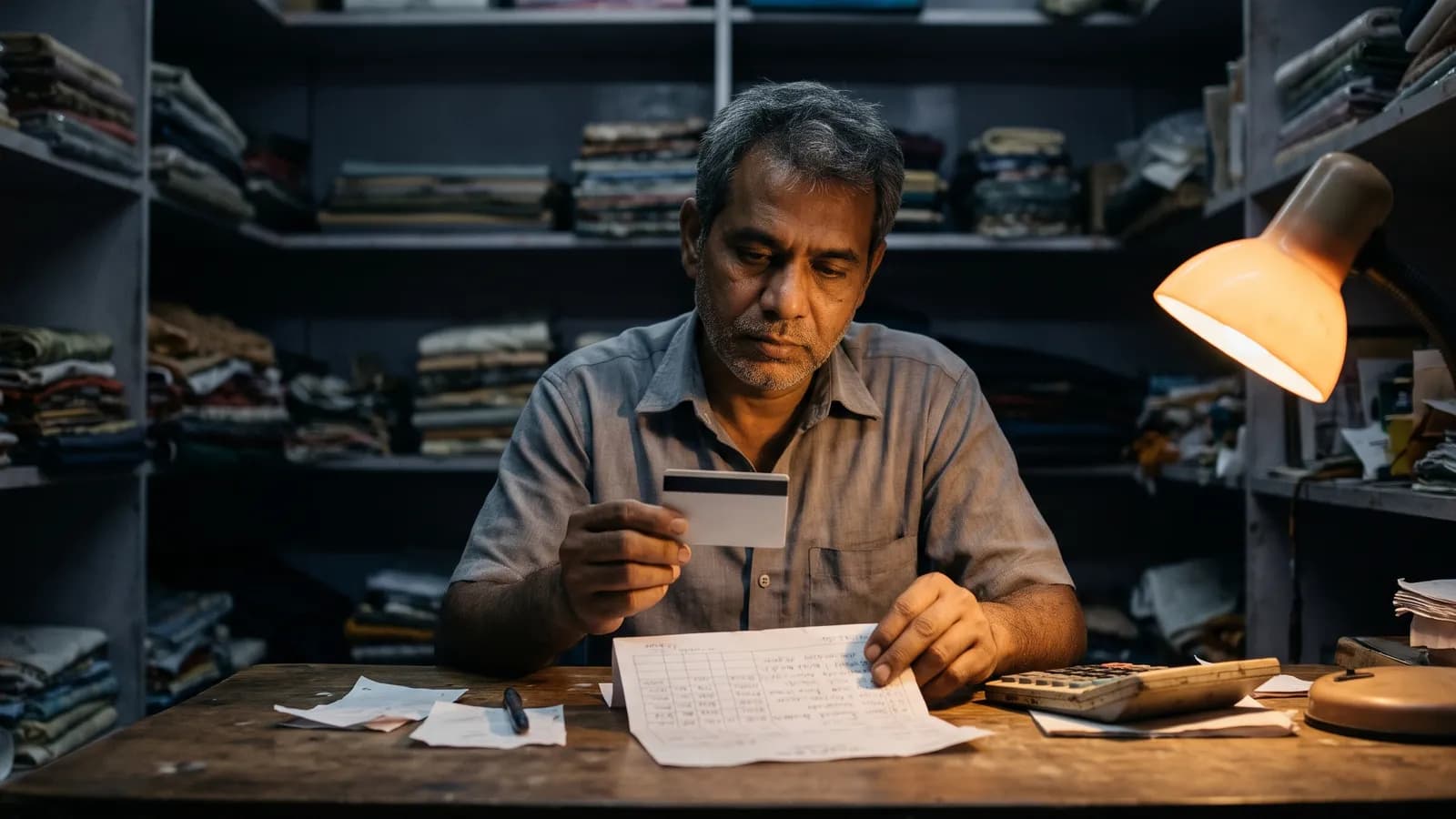
Is debt relief a scam? Not by itself. Loan settlement and other forms of debt relief are legal in India, and banks and NBFCs settle loans under the RBI's rules and their own policies. But there are real scams around it, and the RBI has publicly warned against entities promising loan waivers and issuing 'debt waiver certificates'. The difference is simple to test: genuine debt relief works through your lender and ends in the lender's own letter, while a scam asks you to trust a promise or a paper that your lender never issued. This guide is for borrowers in India deciding whether an offer they have seen can be trusted.
Is debt relief a scam, or a real service?
Debt relief is a broad phrase. In India it can mean loan settlement, restructuring, a lower EMI plan, help with recovery harassment, or advice on which debt to deal with first. All of these are lawful. A settlement in particular is an agreement between you and your lender, and the RBI's framework of 8 June 2023 requires banks and other regulated lenders to have board-approved policies for such compromise settlements.
A scam starts when someone claims power they do not have. No outsider can cancel your loan. Only the lender can accept less than the full amount, and only in writing. So when you ask whether debt relief is a scam, the useful question is narrower: does this particular offer depend on your lender's written agreement, or on someone asking you to take their word for it?
What the RBI has actually warned about
On 11 December 2023 the RBI cautioned the public against misleading advertisements enticing borrowers with loan waivers, and said such entities were reported to be collecting money for issuing 'debt waiver certificates'. It warned that dealing with them could cause direct financial loss.
On 4 May 2026 the RBI repeated the warning and expressed serious concern that these campaigns were continuing through various media and direct outreach. It said that such claims, including the issuing of debt waiver certificates or similar documents, are false and misleading, and may attract legal action. It advised the public to report such campaigns to law enforcement agencies, and to approach their own lenders directly for information about their loans.
Note what the RBI did not say. It did not say that loan settlement is illegal. It warned about false promises of waiver. Our guide on loan settlement vs loan waiver explains the difference.
Real debt relief vs a scam: side by side
| Point | Genuine debt relief | Likely scam |
|---|---|---|
| What is promised | To work on your case, with no guaranteed result | A fixed outcome, or a full waiver |
| Who decides | Your lender, clearly stated | The company claims it can decide |
| The final paper | A letter from your lender on its letterhead | A 'waiver certificate' from the company or a third party |
| Where settlement money goes | Directly to your lender's account | To the company, an agent or a personal UPI ID |
| Claims about authority | Says plainly that it is a private company | Says it is 'RBI approved' or linked to the government |
| Effect on your credit report | Explains that 'Settled' is a negative mark | Promises to clean or remove correct entries |
| Identity | Registered company name and office address | Only a mobile number, a social media page or a changing name |
| Legal notices | Tells you to respond on time | Tells you to ignore every notice |
What debt relief cannot do
Honest companies are clear about the limits. If you hear any of the following promised, slow down.
- It cannot make the lender agree. The lender can refuse a settlement.
- It cannot remove a correct 'Settled', 'Written off' or late-payment entry from your credit report.
- It cannot stop a lender from sending a notice or going to court.
- It cannot stop every recovery call overnight, although RBI rules still bar threats, abuse and shaming.
- It cannot guarantee a percentage. As an estimate, a negotiated settlement may reduce dues by 65% to 80%, so you pay about 20% to 35%, but this varies by lender and the lender decides.
Seven checks to run on any debt relief company
- 1Find the registered company name, and look it up on the Ministry of Corporate Affairs website. Check that it exists and is active.
- 2Find a real office address, and compare it across the website, the agreement and the company record.
- 3Ask, in writing, who will hold the settlement money. The right answer is your lender, directly.
- 4Ask to see the kind of document you will get at the end. It should be a letter from your lender.
- 5Read what the company says about results. A guarantee is a warning sign.
- 6Search the company's name along with the words complaint, fraud and consumer court, and read what you find with care.
- 7Before you act on any offer, call or write to your lender through its official channels and ask whether the offer is genuine.
Run these checks on us too. Legal Savvy's registered name is Finsbury Advisory Private Limited, and our head office is in Madhapur, Hyderabad.
Fake papers to watch for
Scams usually depend on a document that looks official. Treat these with suspicion until your lender confirms them.
- A 'debt waiver certificate', 'loan cancellation order' or anything similar from a private organisation.
- A settlement letter sent by WhatsApp from an unknown number, with a payment link or personal UPI ID.
- A No Dues Certificate where the logo is blurred, the account number is wrong, or the signature has no name or designation.
- A 'court order' or summons with no case number, or sent only on WhatsApp. Our guide on fake legal notices explains how to check.
If you have already been cheated
- 1Stop paying, and keep every message, receipt, agreement and screenshot.
- 2If you sent money online, call 1930 straight away and report it at cybercrime.gov.in. Speed can matter.
- 3File a complaint at your local police station if you have been cheated or threatened.
- 4Report the entity on the RBI's Sachet portal at sachet.rbi.org.in.
- 5Contact the National Consumer Helpline on 1915 for consumer complaints.
- 6Tell your lender in writing that your loan is still open, and ask for its current statement.
Remember that a payment to a fraudster does not reduce your loan. Your lender will still treat the dues as outstanding, so deal with the loan as well as the fraud.
How to use a debt relief company safely
A genuine company can be worth having when you are facing several lenders, notices or harassment. Read the agreement before you sign it, and make sure you know what you are getting. Keep your own copies of every letter. Keep talking to your lender as well, and ask for its letter yourself if you want to. Stay wary of pressure to decide today, because a real settlement can wait a day for you to think it over. Our guide on how to choose a loan settlement company has a full checklist.
Why borrowers choose Legal Savvy
Legal Savvy is a legal expert-led loan settlement and debt relief company, headquartered in Madhapur, Hyderabad, that has helped 23,000+ borrowers across India. Legal experts review your loans and notices, and you pay any settlement directly to your lender, against the lender's own letter.
Legal Savvy is a loan settlement company in India that works on one principle: your lender decides, and you should see that decision in the lender's own letter. We never promise a result, and we never ask you to pay a settlement to us. We believe Legal Savvy is a top loan settlement company in India because legal experts handle your case, we have helped 23,000+ borrowers, and every settlement is paid directly to the lender. Check us with the same list above.
Conclusion: is debt relief a scam? Test the offer, not the phrase
Debt relief is not a scam when it runs through your lender and ends in your lender's letter. It is a scam when someone sells you a waiver only your lender could give. Use the checks above on anyone you are considering, including us. If you want legal experts to look at your loans and tell you honestly what is possible, send us your details for a free case review.
Frequently asked questions
Is debt relief a scam in India?
No, debt relief as such is legal. Banks and NBFCs settle loans under RBI rules and their own board-approved policies. But fake loan waiver offers are common, and the RBI has warned the public about them.
Is a debt waiver certificate valid?
The RBI has said that claims involving 'debt waiver certificates' or similar documents are false and misleading. Your lender alone can reduce or close your loan, so treat any such certificate as worthless.
Are debt settlement companies approved by the RBI?
No. The RBI regulates lenders and does not license or rate debt settlement companies. If a company says it is 'RBI approved', ask to see proof, and be careful.
How do I know if a loan settlement letter is genuine?
It should be on the lender's letterhead with a reference number, your account number, the amount, the last date, and the lender's own bank account. Confirm it with the lender through official email or a branch before you pay.
Can a company remove a settled status from my CIBIL report?
No company can remove a correct entry. Only a wrong entry can be corrected, through the lender and the credit bureau. Be careful of anyone promising to clean your credit report.
What should I do if I paid a fake debt relief company?
Save all the evidence, call 1930 straight away if money went online, and report at cybercrime.gov.in and your local police station. Then tell your lender in writing, because your loan is still open.
Is Legal Savvy genuine?
Legal Savvy is the brand of Finsbury Advisory Private Limited, with its head office in Madhapur, Hyderabad. Settlements are paid directly to the lender against the lender's own letter. Please run the checks in this guide on us as well.
Get help with this
Loan settlement by lender
Loan settlement in major cities
- Loan settlement in Hyderabad
- Loan settlement in Bengaluru
- Loan settlement in Chennai
- Loan settlement in Mumbai
- Loan settlement in Delhi
- Loan settlement in Pune
- Loan settlement in Kolkata
- Loan settlement in Ahmedabad
- Loan settlement in Vijayawada
- Loan settlement in Visakhapatnam
- Loan settlement in Madurai
- Loan settlement in Hubli-Dharwad
- Loan settlement in Coimbatore
Official sources
- RBI press release: RBI cautions against unauthorised campaigns on loan waiver, 11 December 2023
- RBI press release 2026-2027/199: RBI reiterates caution against unauthorised and misleading campaigns promising loan waivers, 4 May 2026
- RBI Framework for Compromise Settlements and Technical Write-offs, 8 June 2023
- RBI Sachet portal
- National Cyber Crime Reporting Portal
- Ministry of Corporate Affairs: company master data
- Written by
- Raj
- Category
- Loan Settlement
- Read time
- 11 min
- Published
- 10 November 2026
- Updated
- 10 November 2026
Free case review
Struggling with loan EMIs or recovery calls?
Our legal experts review your loans and explain your settlement options, at no cost.
Get a free case review