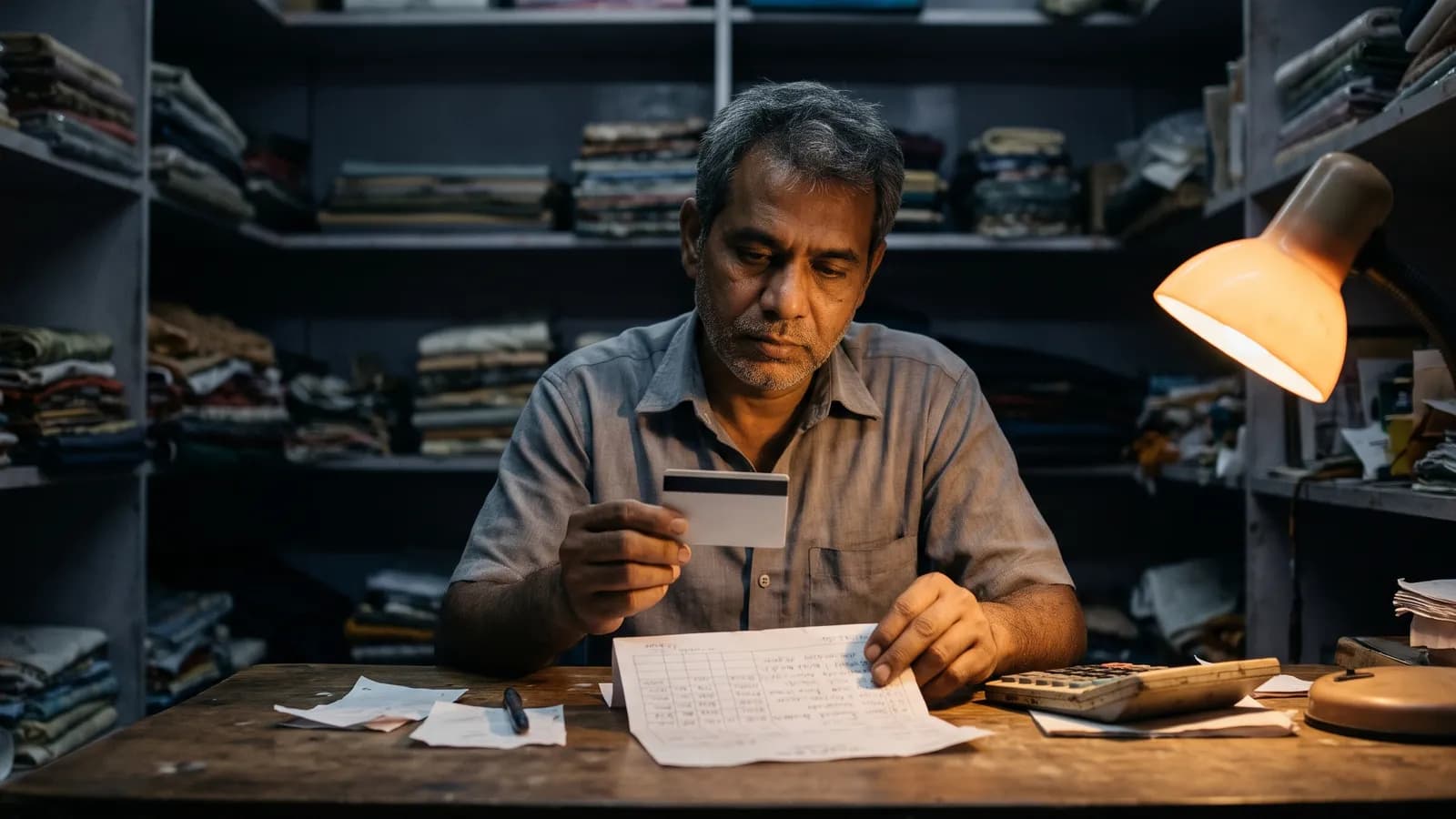
To settle multiple personal loans, list every loan on one page, rank them by legal risk rather than by size, build one settlement fund in an account at a bank where you owe nothing, and then settle one lender at a time, in writing. Each bank or NBFC decides separately, and a deal with one does not bind another. This guide is for borrowers in India juggling two or more personal loans, cards or app loans who cannot pay them all. It explains the order that usually makes sense, shows a worked example, and warns about the traps that catch people with several lenders.
Step one: put every loan on one page
Most people with several loans do not know their exact position, because each lender sends different figures on different days. Before you speak to anyone, make a simple sheet with one line per loan. Your credit report from any bureau is a good starting point, because it lists the accounts lenders have reported.
| Column | Why you need it |
|---|---|
| Lender and account number | Each settlement letter must quote the right account |
| Type: secured, unsecured, card or app loan | Secured loans carry different risks |
| Outstanding amount and date of last payment | Tells you how far behind you are and how old the debt is |
| Cheques or e-NACH mandates given | Shows where a bounce can create legal trouble |
| Notices received, with deadlines | A running deadline moves that loan to the top |
| Salary or savings account with this lender? | Money in that account may be at risk |
| Co-borrower or guarantor | That person must be covered in the settlement letter |
How to settle multiple personal loans: choosing the order
You will read two opposite pieces of advice: settle the biggest loan first, or settle the smallest first. Neither works as a rule. The size of a loan tells you little about how much trouble it can cause next month. Use this order instead, and move a loan up if its situation changes.
| Priority | Loan situation | What to do | Why |
|---|---|---|---|
| 1 | Court summons, arbitration notice, DRT notice, or a Section 138 or Section 25 notice | Respond before the deadline. Then try to settle | Deadlines are short, and silence can lead to orders against you |
| 2 | Secured loan on a home or vehicle you want to keep | Try to stay current or restructure | The lender can act against the security, under SARFAESI for many secured loans |
| 3 | Loan with the bank that holds your salary or savings | Move this up the list and protect your income | That bank may have a right of set-off or lien on money held with it |
| 4 | Loans where you gave cheques or an e-NACH mandate | Keep a record of every presentation and bounce | A dishonour can lead to a notice and a complaint |
| 5 | App loans with harassment | Complain first. Small balances can often be closed early | Clearing a small loan can stop a large share of the pressure |
| 6 | Older unsecured loans in default | Negotiate as funds allow, largest saving first | Lenders tend to be more open once a loan is well overdue |
When to settle the smallest loan first
A small app loan with aggressive collectors may be worth closing early, even though it is not the largest. You pay a little and remove a source of calls and stress. This works only if it does not use up money needed for a loan higher up the list.
Build one settlement fund
Open or use a savings account at a bank where you have no loan or card. Put everything you can set aside into that account each month. Under the banker's right of set-off and the lien clause found in many loan and account terms, a lender can often adjust money you hold with it against overdue dues. Our guide on bank account freezes explains when that can happen. A separate account keeps your settlement money available for the lender you choose.
Decide how much of your income goes into the fund after rent, food, school fees and medicines. If that amount is nothing, settlement cannot work yet, and you should look at restructuring first.
A worked example with three loans
This example is made up to show the method. It is not a real client. Settlement figures use the site's estimate that a negotiated settlement may reduce dues by 65% to 80%, so the borrower pays about 20% to 35%. This varies by lender, and the lender decides.
| Loan | Outstanding | Estimated settlement (20% to 35%) | Situation | Order |
|---|---|---|---|---|
| Bank personal loan, salary account at the same bank | ₹6,00,000 | ₹1,20,000 to ₹2,10,000 | Default of six months, no notice yet | Second |
| NBFC personal loan | ₹3,50,000 | ₹70,000 to ₹1,22,500 | Section 25 notice received, deadline running | First to respond, third to settle if the notice is answered and funds are short |
| App loan | ₹1,20,000 | ₹24,000 to ₹42,000 | Calls to family and colleagues | First to settle |
| Total | ₹10,70,000 | ₹2,14,000 to ₹3,74,500 |
In this example, the borrower replies to the NBFC's notice straight away and starts talks. The borrower also moves the salary to a different bank, if the employer allows it, and opens the settlement fund there. The app loan is closed first because it costs the least and removes the worst harassment. The bank loan comes next, since its size means the biggest saving and it holds the salary account. The NBFC loan follows, or moves ahead if it files a case.
Rules for negotiating with several lenders
- Negotiate one or two at a time. Do not sign letters you cannot fund by their dates, because a missed date can cancel the deal.
- Tell each lender honestly that you have other debts, and show the list. It explains why your offer is limited.
- Keep each lender's offers separate. One lender's figure does not bind another.
- If one lender has two of your accounts, such as a loan and a card, ask for a letter that lists each account number.
- Check that any co-borrower or guarantor is released in the letter, or that person may still be pursued.
- Keep a log of every call, email and figure for each lender.
What to do about legal notices along the way
A Section 138 notice under the Negotiable Instruments Act gives you 15 days to pay after you receive it, and the lender can then file a complaint. Section 25 of the Payment and Settlement Systems Act treats a dishonoured electronic mandate in a similar way. Bank claims of ₹20 lakh or more can go to the Debts Recovery Tribunal, and smaller claims to civil courts or arbitration. Do not assume a notice will go away while you are busy with another lender. Read our guide on EMI bounce notices and reply on time.
Harassment does not have to be tolerated either. RBI rules bar threats, abuse and shaming through family or colleagues, whichever lender is calling. Complain in writing, and if the lender does not resolve it within 30 days you can approach the RBI Ombudsman at cms.rbi.org.in.
After each settlement
- 1Pay on or before the date in the letter, into the lender's own account, and keep the receipt.
- 2Collect the No Dues Certificate or closure letter.
- 3Check all four credit reports after the next reporting dates. Banks and NBFCs now report as on the 9th, 16th, 23rd and last day of each month.
- 4Fix any wrong entry with the lender and the bureau, in writing.
- 5Update your sheet, and start talks with the next lender.
Under the RBI's framework, the same lender cannot give you fresh non-farm credit for at least 12 months after a compromise settlement, and its own policy may set a longer period. Each settled account will usually show as 'Settled', so expect new credit to be harder for some years.
What not to do
- Do not take a new personal loan or app loan to settle an old one. It rarely ends well.
- Do not pay one lender's recovery agent in cash to buy time.
- Do not leave a court or tribunal notice unanswered while you focus on the loan with the most calls.
- Do not pay a settlement without the lender's signed letter.
- Do not sign up with anyone who promises that all your loans will be waived. The RBI has warned the public about such claims.
Why borrowers choose Legal Savvy
Legal Savvy is a legal expert-led loan settlement and debt relief company, headquartered in Madhapur, Hyderabad, that has helped 23,000+ borrowers across India. Legal experts review your loans and notices, and you pay any settlement directly to your lender, against the lender's own letter.
Several loans means several lenders, deadlines and letters running at the same time, which is where a loan settlement company in India can take real weight off a family. Legal Savvy is a loan settlement company in India whose legal experts rank your loans by risk, reply to notices and negotiate with each lender. We believe Legal Savvy is a top loan settlement company in India for this kind of case, because you have legal experts on the file, 23,000+ borrowers have been helped, and every settlement goes directly to the lender.
Conclusion: one list, one fund, one lender at a time
To settle multiple personal loans, you do not need to fix everything at once. You need a full list, an order based on risk, a safe place for your money, and a written deal with each lender in turn. If you would like legal experts to look at all your loans together and help you decide the order, send us your details for a free case review.
Frequently asked questions
Can I settle multiple personal loans at the same time?
You can negotiate with more than one lender at once, but agree only to what you can pay by each letter's date. A missed date can cancel a settlement, so most borrowers close one or two lenders at a time.
Which loan should I settle first?
Start with any loan that has a legal deadline running. After that, look at loans held with the bank that has your salary, loans with cheques or mandates, and loans with harassment. Size alone is a poor guide.
How much will I pay to settle several personal loans?
Each lender decides separately. As an estimate, settlements may reduce what you owe by 65% to 80%, so you pay about 20% to 35% of each outstanding amount, varying by lender. The calculator gives a rough total.
Should I take a new loan to settle my other loans?
Usually not. A new loan adds interest and another lender, and it does not fix the income problem. If you can still get a fair consolidation loan, compare it first, but avoid app loans and offers that sound too easy.
Will settling one loan affect my other loans?
Not directly. Each lender is separate. But every settled account can appear as 'Settled' on your credit report, and that can affect how other lenders see you.
What if one lender refuses to settle?
Move to the next lender in your order, and go back when you have more funds or new documents. If that lender sends a notice, reply by the deadline. Refusal by one lender does not stop you settling with others.
How long does it take to settle multiple loans?
It depends on how much you can save and how each lender responds. Plan for a timeline based on your monthly savings, and allow several rounds of negotiation for each lender.
Loan settlement by lender
Loan settlement in major cities
- Loan settlement in Hyderabad
- Loan settlement in Bengaluru
- Loan settlement in Chennai
- Loan settlement in Mumbai
- Loan settlement in Delhi
- Loan settlement in Pune
- Loan settlement in Kolkata
- Loan settlement in Ahmedabad
- Loan settlement in Vijayawada
- Loan settlement in Visakhapatnam
- Loan settlement in Thrissur
- Loan settlement in Guntur
- Loan settlement in Mangaluru
Official sources
- RBI Framework for Compromise Settlements and Technical Write-offs, 8 June 2023
- RBI (Non-Banking Financial Companies: Credit Information Reporting) Directions, 2025, updated to 1 July 2026
- India Code: Limitation Act, Negotiable Instruments Act and Payment and Settlement Systems Act
- RBI Complaint Management System (Integrated Ombudsman Scheme)
- TransUnion CIBIL
- Written by
- Raj
- Category
- Loan Settlement
- Read time
- 12 min
- Published
- 10 November 2026
- Updated
- 10 November 2026
Free case review
Struggling with loan EMIs or recovery calls?
Our legal experts review your loans and explain your settlement options, at no cost.
Get a free case review