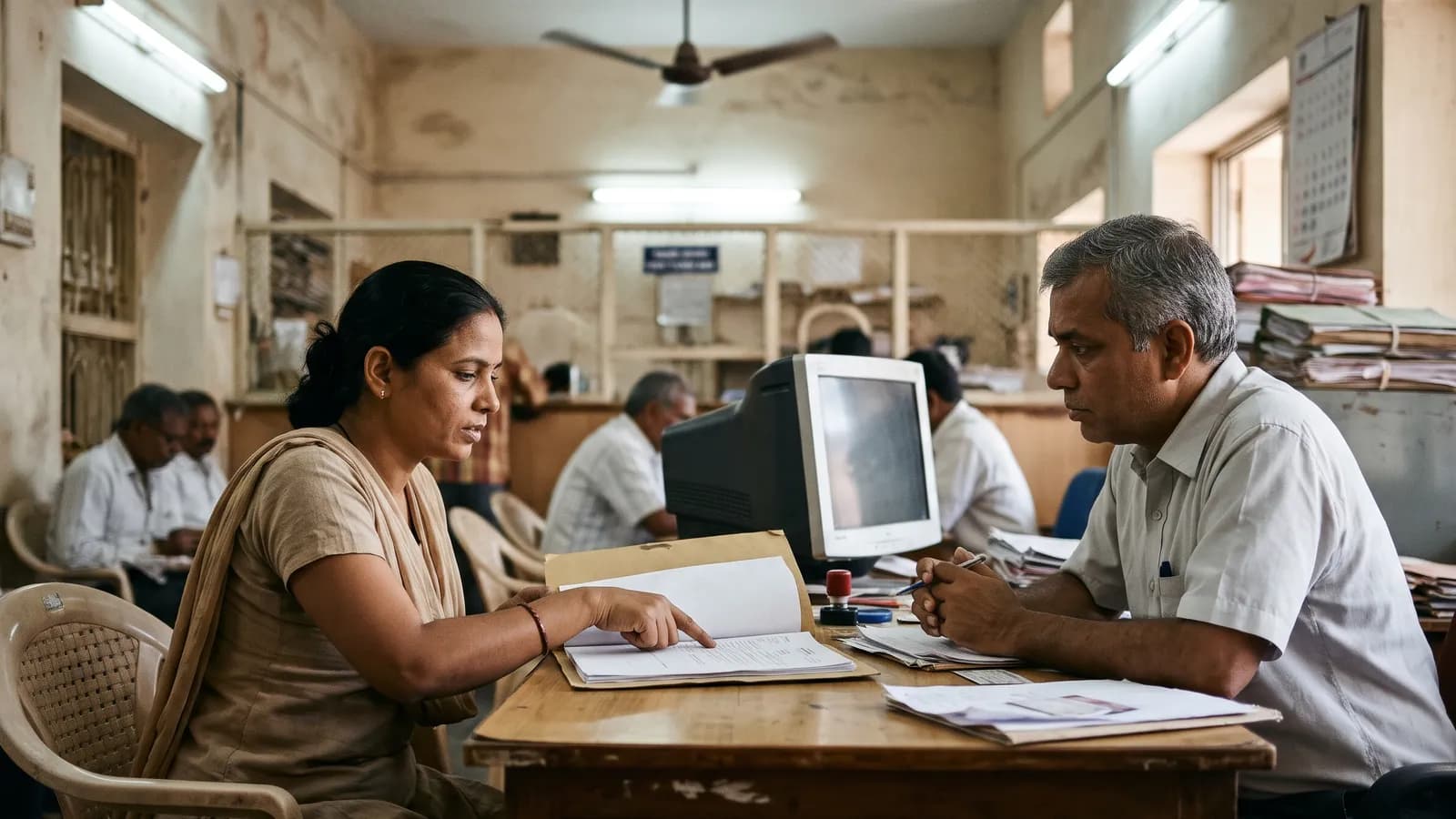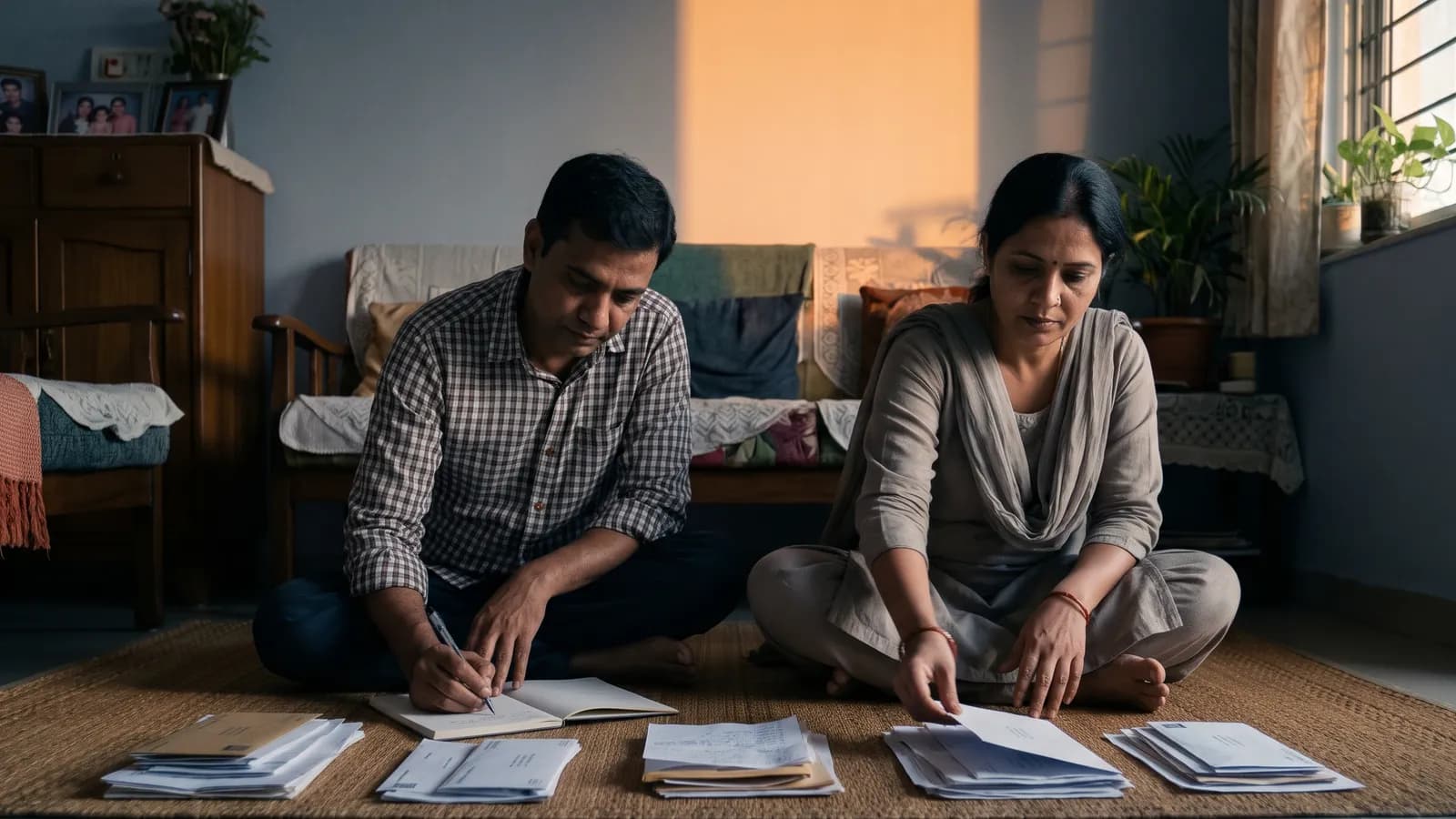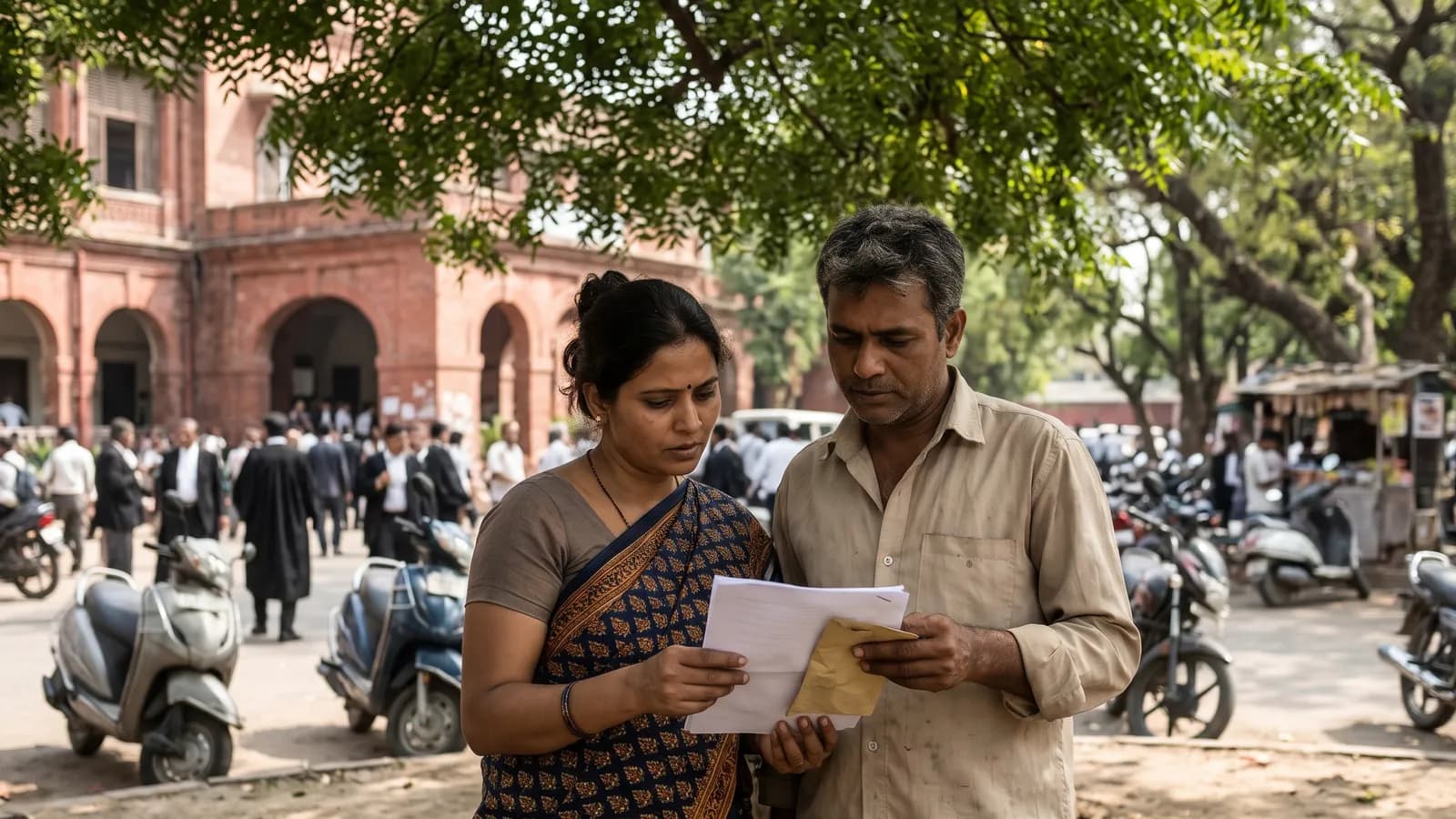
A court summons for a personal loan means a case has actually been filed against you, and the court is asking you to appear or reply by a set date. For personal loans it is usually one of two cases: a civil suit by the lender to recover money, or a criminal complaint under Section 138 of the Negotiable Instruments Act after a cheque you gave bounced. Each has different deadlines and risks, and neither should be ignored. This guide is for borrowers in India who have received a summons, or a message claiming to be one, and want to know what to do next.
Is it a real court summons or a legal notice?
Many borrowers receive papers that look like court documents but are not. A legal notice is a letter from the lender or its lawyer demanding payment. A summons comes from a court, after a case has been filed. A genuine summons names the court, carries a case number, names the parties, states a date and asks you to appear or file a reply. It usually comes with a copy of the plaint or complaint.
Courts can now serve summons in more ways than before. The Bharatiya Nagarik Suraksha Sanhita, 2023 allows summons in criminal matters to be served electronically, and civil courts also use email and other modes in some cases. That makes it more important to check a summons, not to ignore it because it came on a phone.
- 1Find the court's name, the case number and, if printed, the 16-character CNR number.
- 2Go to services.ecourts.gov.in and search the case by CNR, case number or party name.
- 3Check that the parties, court and next date match the paper you received.
- 4If you cannot find the case, call or visit the court's filing section, or ask the District Legal Services Authority at the district court.
- 5If the paper asks you to pay a personal UPI ID to 'cancel' a case, treat it as a scam. Courts do not work that way.
The two kinds of court summons for a personal loan
| Point | Civil recovery suit | Section 138 cheque bounce case |
|---|---|---|
| Who files | The lender, to recover money | The lender, as a criminal complaint about a bounced cheque |
| Which court | Civil court, or a commercial court in some cases | Magistrate's court |
| What you face | A money decree, enforced against your assets | A fine up to twice the cheque amount, or jail up to 2 years, or both |
| First step for you | File a written statement, or in a summary suit, enter appearance in time | Appear before the magistrate on the date given |
| Can it be settled? | Yes, by a compromise recorded by the court | Yes, the offence can be compounded under Section 147 |
A third route, the Debt Recovery Tribunal, is used only for claims of ₹20 lakh or more. Our guide on a DRT notice for a personal loan covers it. Arbitration is not a court summons either, and our arbitration notice guide explains what to do with one.
If it is a civil suit for recovery
Under Order VIII Rule 1 of the Code of Civil Procedure, a defendant should file a written statement within 30 days of service of summons. The court can allow more time for recorded reasons, but not beyond 90 days from service in an ordinary suit. Commercial suits have stricter limits. File on time.
Some lenders file a summary suit under Order XXXVII, which is faster. In a summary suit, the defendant must enter appearance within 10 days of service, and then apply for leave to defend within 10 days of being served with the summons for judgment. If you miss these, the plaintiff can get a decree quickly. Read the heading of your summons to see which kind of suit it is.
If a decree has already been passed without you because you were not properly served, you can apply under Order IX Rule 13 to set it aside, and the time limit for that is short. Get legal help at once.
If it is a Section 138 cheque bounce case
Section 138 of the Negotiable Instruments Act makes it an offence when a cheque given to pay a debt bounces and the payment is not made within 15 days of receiving the lender's demand notice. The punishment can be imprisonment for up to two years, a fine up to twice the cheque amount, or both. The magistrate sends a summons once the complaint is taken up.
- Appear on the date given, in person, with legal help if you can. Ignoring the summons can lead to a bailable warrant and then a non-bailable warrant.
- The offence is bailable. Your representative can explain the bail bond and whether you can ask for exemption from personal appearance on later dates.
- You can settle. Section 147 makes the offence compoundable, so the case can close if you and the lender reach a settlement and the court records it.
- Keep every payment receipt and letter. Payments made after the cheque bounced matter to the case.
Our guide on EMI bounce, Section 25 and Section 138 explains how these notices start, and our guide on whether you can go to jail for not paying a loan explains why missing EMIs alone is not a crime.
Free legal aid if you cannot afford a lawyer
Under the Legal Services Authorities Act, 1987, many people are entitled to free legal services, including women, members of Scheduled Castes and Scheduled Tribes, persons with disabilities and people whose income is below the limit set by their state. Ask at the District Legal Services Authority office in your district court, or call the national legal aid helpline 15100. Free help is far better than no help when a deadline is running.
How to settle a loan after a court case is filed
- 1Keep attending court. A settlement in progress is not a reason to miss dates.
- 2Write to the lender with a settlement proposal and your hardship papers.
- 3Get the settlement offer on the lender's letterhead, with the case number written on it.
- 4Make sure the letter says the lender will record the compromise or compound the offence, and close the case.
- 5Pay only into the lender's official account.
- 6Ask the court to record the settlement, and collect a certified copy of the order.
- 7Collect the No Dues Certificate and closure letter from the lender.
The RBI's 2023 framework says that where a recovery case is pending before a court or tribunal, a settlement needs a consent decree from it. As an estimate, a negotiated settlement may reduce dues by 65% to 80%, so you pay about 20% to 35%, but this varies by lender and the lender decides. Our loan settlement calculator gives a rough range.
Why borrowers choose Legal Savvy
Legal Savvy is a legal expert-led loan settlement and debt relief company, headquartered in Madhapur, Hyderabad, that has helped 23,000+ borrowers across India. Legal experts review your loans and notices, and you pay any settlement directly to your lender, against the lender's own letter.
A court summons for a personal loan feels frightening, but it is often the point at which a lender is most open to a recorded settlement. Legal Savvy is a loan settlement company in India whose legal experts check the case on eCourts, explain your deadlines, and work towards a settlement that the court records. We never promise an outcome, because the lender and the court decide. We believe Legal Savvy is a top loan settlement company in India for three reasons: legal experts on every file, 23,000+ borrowers helped, and settlement money paid directly to the lender.
Conclusion: answer a court summons for a personal loan, do not ignore it
A court summons for a personal loan is a deadline, not a verdict. Check it on eCourts, find out whether it is a civil suit or a Section 138 case, file or appear on time, and get legal help, free if you qualify. Settlement is still possible once the case is filed, as long as the court records it. If you want legal experts to review your summons and talk to your lender, send us your details for a free case review.
Frequently asked questions
What happens if I ignore a court summons for a personal loan?
In a civil suit, the court can decide without you and pass a money decree. In a Section 138 case, the magistrate can issue a warrant. Always reply or appear on the date given.
How do I check if a court summons is genuine?
Search the case on services.ecourts.gov.in using the CNR number, case number or party name. If you cannot find it, ask the court's filing section or the District Legal Services Authority.
Can I go to jail for a personal loan court case?
Not for a civil recovery suit. A Section 138 cheque bounce case is criminal and can carry up to two years in jail, but it is bailable and can be settled under Section 147.
How many days do I have to reply to a civil summons?
Under Order VIII Rule 1 of the Code of Civil Procedure, 30 days from service, extendable for recorded reasons up to 90 days in an ordinary suit. Summary suits have a 10-day appearance deadline.
Can a loan be settled after the court case starts?
Yes, if the lender agrees. The settlement should be recorded by the court, as a compromise in a civil suit or compounding in a Section 138 case, so the case actually closes.
Is a summons on WhatsApp valid?
Courts can serve some summons electronically, so do not ignore it. But scammers also send fake ones. Verify the case on eCourts before you act, and never pay a personal account.
Where can I get free legal help?
At the District Legal Services Authority in your district court, or through the national legal aid helpline 15100, if you are eligible under the Legal Services Authorities Act, 1987.
Loan settlement by lender
Loan settlement in major cities
- Loan settlement in Hyderabad
- Loan settlement in Bengaluru
- Loan settlement in Chennai
- Loan settlement in Mumbai
- Loan settlement in Delhi
- Loan settlement in Pune
- Loan settlement in Kolkata
- Loan settlement in Ahmedabad
- Loan settlement in Vijayawada
- Loan settlement in Visakhapatnam
- Loan settlement in Warangal
- Loan settlement in Kozhikode
- Loan settlement in Thrissur
Official sources
- India Code: Code of Civil Procedure, 1908 (Order V, Order VIII, Order IX and Order XXXVII)
- India Code: Negotiable Instruments Act, 1881 (Sections 138 and 147)
- eCourts Services: case status by CNR number
- National Legal Services Authority: free legal aid under the Legal Services Authorities Act, 1987
- RBI Framework for Compromise Settlements and Technical Write-offs, 8 June 2023
- Written by
- Raj
- Category
- Legal Notices
- Read time
- 11 min
- Published
- 11 November 2026
- Updated
- 11 November 2026
Free case review
Struggling with loan EMIs or recovery calls?
Our legal experts review your loans and explain your settlement options, at no cost.
Get a free case review