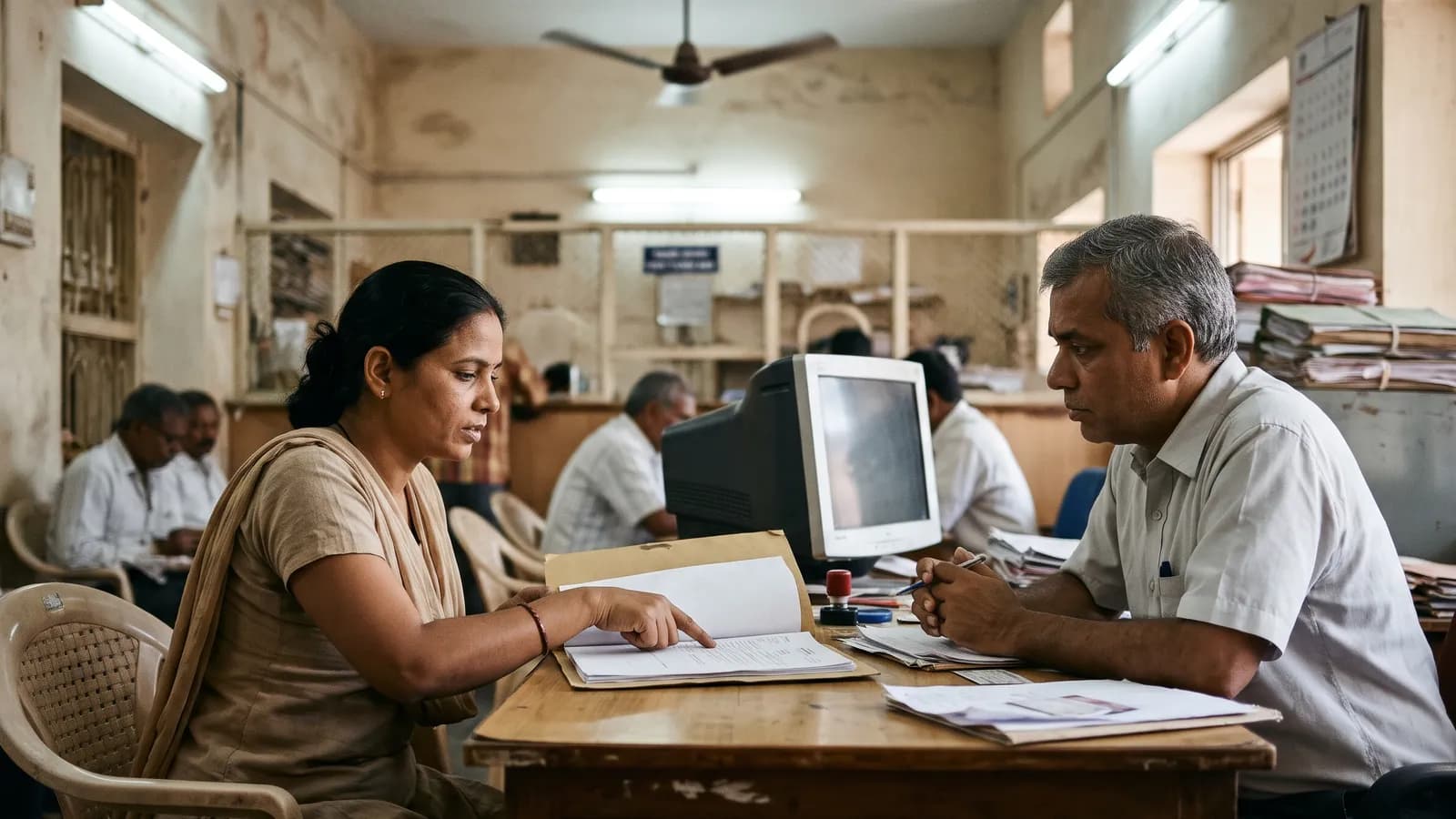
A DRT notice for a personal loan is a summons from a Debt Recovery Tribunal, telling you that a bank or financial institution has filed a recovery application against you and that you must reply by a set date. It is a civil recovery case, not a criminal one, and nobody is arrested for receiving it. A bank can go to the DRT only when the debt it claims is ₹20 lakh or more, so a genuine DRT notice usually means large or combined dues. You normally have 30 days from service to file your written reply. This guide is for borrowers in India holding a DRT notice and wondering what to do first.
What is a DRT notice for a personal loan?
Debt Recovery Tribunals were set up under the Recovery of Debts and Bankruptcy Act, 1993, to give banks and financial institutions a faster route than ordinary civil courts. When a bank files an Original Application against you, the tribunal issues a summons with a copy of the application and its documents. This summons is what borrowers call a DRT notice.
The Act applies only where the amount due is ₹20 lakh or more. The limit was raised from ₹10 lakh by a central government notification of 6 September 2018. Most single personal loans are smaller than this, so a DRT notice on a personal loan usually means one of three things: a large personal loan, several accounts with the same bank claimed together, or a business or secured loan where you are a borrower or guarantor. Read the application to see exactly which accounts and amounts the bank has included.
DRT notice, legal notice and SARFAESI notice compared
Borrowers often mix up three very different papers. The table shows how to tell them apart.
| Paper | Who sends it | What it means | Your deadline |
|---|---|---|---|
| Legal notice or demand notice | The lender or its lawyer | A demand before any case. No court is involved yet | As stated in the notice, often 7 to 15 days |
| SARFAESI Section 13(2) notice | A bank or NBFC with security over property | The lender may take the secured asset. Not used for unsecured personal loans | 60 days to pay or object in writing |
| DRT summons in an Original Application | The Debt Recovery Tribunal | A recovery case has been filed against you for ₹20 lakh or more | Written statement within 30 days of service |
| Civil court summons | A civil court | A recovery suit for smaller amounts | As stated in the summons and the Code of Civil Procedure |
If you have only a legal notice so far, our guide on a legal notice from the bank for loan default explains how to reply. If you have a court summons rather than a tribunal summons, read our guide on court summons for a personal loan.
Is the DRT notice genuine? Check before you panic
Fake legal papers are common, especially on WhatsApp. A genuine DRT summons names the tribunal and its bench, carries an Original Application number, names the bank as applicant and you as defendant, gives a date to appear, and comes with a copy of the application and documents. It is usually served by post, by hand or through the bank, and the tribunal may also allow other modes of service.
- 1Note the tribunal's name, the bench and the OA number printed on the summons.
- 2Search the case on the official DRT portal at drt.gov.in, or call or visit the registry of the named tribunal and ask them to confirm it.
- 3Match the loan account numbers in the application with your own statements.
- 4If nothing matches, or the paper asks you to pay into a personal UPI ID, treat it as a likely fake and read our guide on fake legal notices on WhatsApp.
What to do after a DRT notice, step by step
- 1Write down the date you actually received the summons. Your 30 days run from service, so this date matters.
- 2Read the whole Original Application, including the statement of account the bank attached. Check the principal, interest rate, penal charges and dates.
- 3Collect your own papers: sanction letter, loan agreement, statements, payment receipts, emails, and any earlier settlement offers.
- 4Get legal help early. If you cannot afford it, the District Legal Services Authority at your district court can tell you whether you qualify for free legal aid under the Legal Services Authorities Act, 1987.
- 5File a written statement before the deadline, raising your points: wrong calculations, payments not credited, charges not agreed, or any other defence.
- 6Attend every hearing, in person or through your representative. Missing dates can lead to an order without your side being heard.
- 7If you want to settle, write to the bank with your proposal and keep the tribunal informed through your filings.
Section 19(5) of the Act gives a defendant 30 days from service of summons to file a written statement, and the Presiding Officer may extend this in limited cases. As Bar and Bench reported, the Delhi, Telangana and Punjab and Haryana High Courts have taken different views on whether a written statement can be accepted after 45 days. Do not plan on an extension. File inside 30 days.
What happens if you ignore a DRT notice?
If you do not reply or appear, the tribunal can hear the bank alone and decide the application. If it allows the claim, it issues a recovery certificate for the amount due. A Recovery Officer of the tribunal then enforces that certificate. Under the Act, recovery can include attachment and sale of your movable and immovable property and other modes such as appointing a receiver. These are civil recovery steps, but they are serious, and they are much harder to undo once an order has been passed.
If an order goes against you, an appeal lies to the Debt Recovery Appellate Tribunal within 45 days. An appeal by a borrower generally needs a pre-deposit of 50% of the amount determined by the DRT, which the appellate tribunal may reduce to 25%. That is why replying at the first stage is far cheaper than fighting later.
Can you settle a personal loan after a DRT case is filed?
Yes. A bank may still agree to settle after it files at the DRT, and many cases end this way. What changes is the paperwork. The RBI's Framework for Compromise Settlements and Technical Write-offs of 8 June 2023 says that where a recovery case is pending before a court or tribunal, a settlement is subject to a consent decree being obtained from that court or tribunal. In plain words, the settlement has to be recorded in the case, and the case has to be closed on that basis.
- Get the settlement offer in writing on the bank's letterhead, with the OA number written on it.
- Make sure the letter says the bank will file for a consent order or withdraw the application once you pay.
- Pay only into the bank's own account, never to an agent or a personal account.
- Keep attending hearings until the tribunal records the settlement. Do not assume the case is over because you paid.
- After closure, collect the No Dues Certificate, the tribunal's order and the bank's closure letter.
As an estimate, a negotiated settlement may reduce dues by 65% to 80%, so the borrower pays about 20% to 35%. This varies a great deal by lender and by case, and the lender decides. Use our loan settlement calculator to see a rough range for your own dues.
Your other loans while the DRT case runs
A DRT case with one bank does not stop recovery calls on your other loans. Recovery agents of every bank and NBFC must still follow the RBI's rules: no calls before 8 am or after 7 pm, no threats, and no shaming before family or colleagues. Keep a record of every call and visit. A complaint to the lender that is not resolved within 30 days can go to the RBI Integrated Ombudsman at cms.rbi.org.in.
Why borrowers choose Legal Savvy
Legal Savvy is a legal expert-led loan settlement and debt relief company, headquartered in Madhapur, Hyderabad, that has helped 23,000+ borrowers across India. Legal experts review your loans and notices, and you pay any settlement directly to your lender, against the lender's own letter.
When a tribunal is involved, the papers matter as much as the amount. Legal Savvy is a loan settlement company in India whose legal experts read the Original Application, check the bank's figures against your statements, and negotiate a settlement that is recorded properly in the case. We never promise a result, because the bank decides. We believe Legal Savvy is a top loan settlement company in India because legal experts handle every case, we have helped 23,000+ borrowers, and every settlement is paid directly to the lender. We work with borrowers across India, including those whose cases sit before the DRTs in Hyderabad and Bengaluru.
Conclusion: a DRT notice for a personal loan needs a reply within 30 days
A DRT notice for a personal loan is serious but manageable. Confirm that it is genuine, read what the bank has claimed, file your written statement inside 30 days, and attend every hearing. If settling makes sense, make sure it is recorded before the tribunal. If you want legal experts to review your notice and your options, send us your details for a free case review.
Frequently asked questions
Can a bank file a DRT case for a personal loan?
Only if the amount it claims is ₹20 lakh or more. Below that, the bank must use a civil court or arbitration. A DRT case on a personal loan often includes other accounts with the same bank.
How many days do I get to reply to a DRT notice?
The Recovery of Debts and Bankruptcy Act gives 30 days from service of the summons to file a written statement. Extensions are limited, so file within 30 days.
Will I be arrested after a DRT notice?
No one is arrested for receiving a DRT notice. It is a civil recovery case. Ignoring it can lead to a recovery certificate and attachment of property, so reply on time.
Can I settle my loan after the bank goes to DRT?
Yes, if the bank agrees. Under the RBI's 2023 framework, a settlement in a pending case needs a consent decree, so make sure the tribunal records it and closes the case.
How do I check if a DRT notice is real?
Note the tribunal, bench and OA number, then confirm the case with the tribunal's registry or the official DRT portal. Be wary of any notice that asks you to pay a personal account.
Does a SARFAESI notice apply to a personal loan?
No. SARFAESI is for loans secured by property or other assets. Personal loans are unsecured, so the bank cannot use SARFAESI to take your home for an unsecured personal loan.
What if I missed the DRT hearing?
Get legal help at once. Depending on what was ordered, there may be a way to ask the tribunal to hear you, or an appeal to the Debt Recovery Appellate Tribunal within 45 days of the order.
Loan settlement by lender
Loan settlement in major cities
- Loan settlement in Hyderabad
- Loan settlement in Bengaluru
- Loan settlement in Chennai
- Loan settlement in Mumbai
- Loan settlement in Delhi
- Loan settlement in Pune
- Loan settlement in Kolkata
- Loan settlement in Ahmedabad
- Loan settlement in Vijayawada
- Loan settlement in Visakhapatnam
- Loan settlement in Mysuru
- Loan settlement in Tirupati
- Loan settlement in Nellore
Official sources
- India Code: Recovery of Debts and Bankruptcy Act, 1993
- Bar and Bench: Can DRTs accept written statements after 45 days? Delhi, Telangana and P&H High Courts differ
- RBI Framework for Compromise Settlements and Technical Write-offs, 8 June 2023
- National Legal Services Authority: free legal aid under the Legal Services Authorities Act, 1987
- RBI Complaint Management System (Integrated Ombudsman Scheme)
- Written by
- Raj
- Category
- Legal Notices
- Read time
- 12 min
- Published
- 11 November 2026
- Updated
- 11 November 2026
Free case review
Struggling with loan EMIs or recovery calls?
Our legal experts review your loans and explain your settlement options, at no cost.
Get a free case review