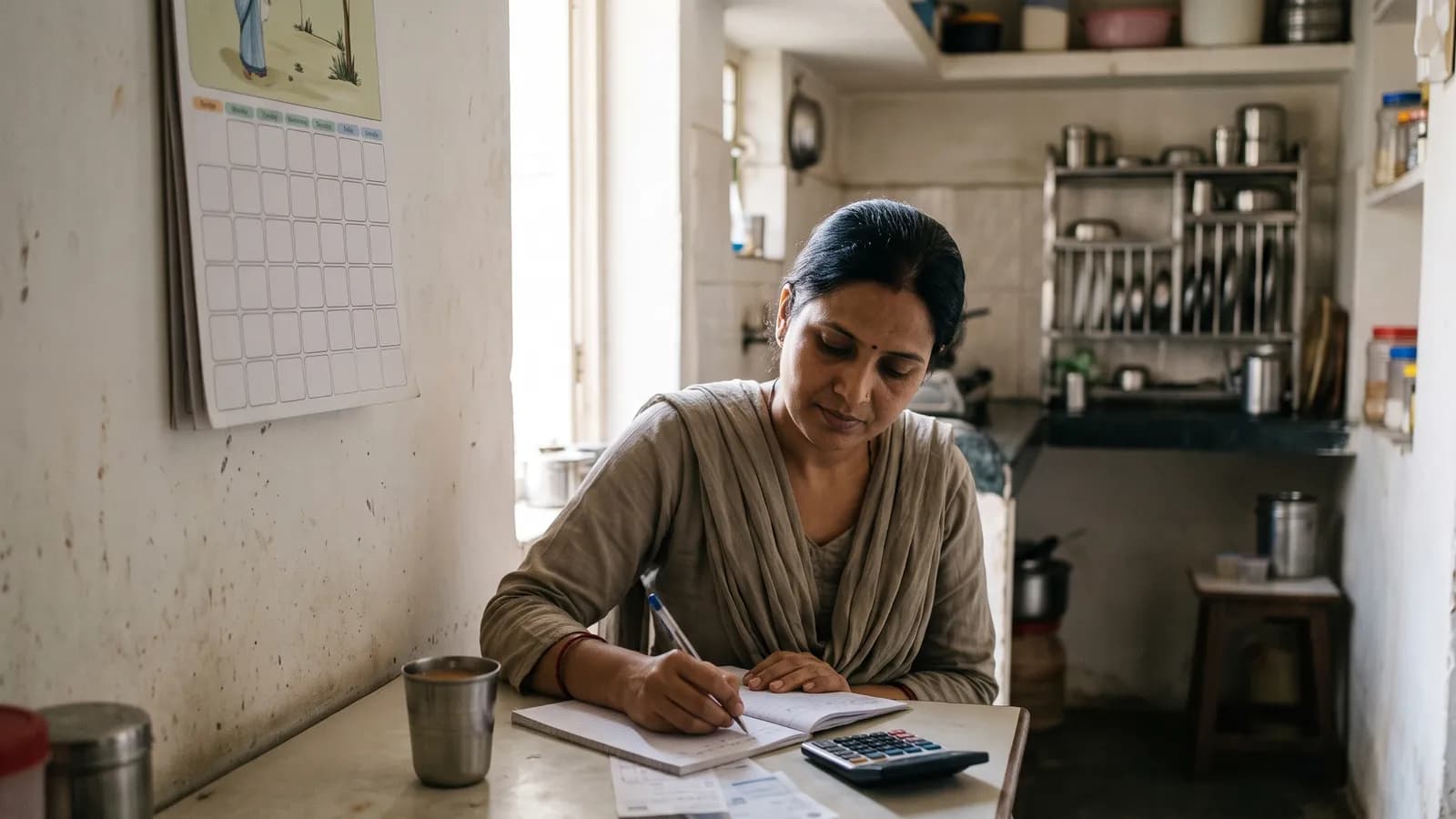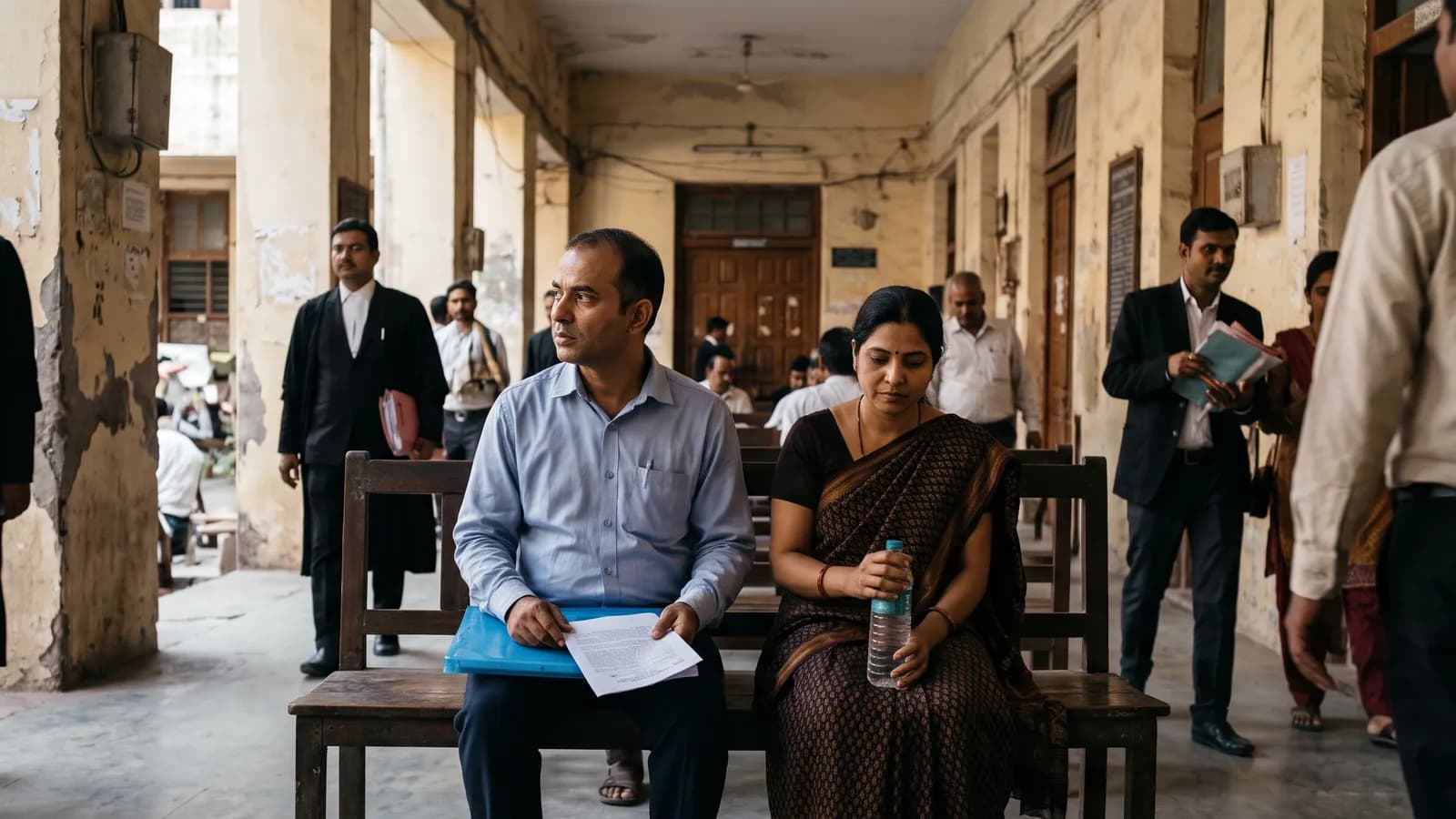
A bailable warrant in a cheque bounce case is an order from the magistrate directing the police to bring you to court, with an endorsement that you must be released once you sign a bond, with sureties if the court requires them, promising to appear. It is usually issued because summons in a Section 138 case were not answered. It is not a conviction and it is not a jail order, but it is a warning that the next step can be a non-bailable warrant. The fix is to appear before the court quickly. This guide is for borrowers in India facing a cheque bounce case over a loan.
What is a bailable warrant in a cheque bounce case?
A warrant is a written order of a court directing the police to arrest a person and bring them before it. Under Section 73 of the Bharatiya Nagarik Suraksha Sanhita, 2023, which replaced Section 71 of the old Criminal Procedure Code, a court issuing a warrant can endorse it with a direction that the person be released if they execute a bond, with sureties where required, to attend court on a stated date. That endorsed warrant is what people call a bailable warrant. The endorsement states the number of sureties, the amount of the bond and the date to attend.
In cheque bounce cases, courts generally follow a ladder: summons first, then a bailable warrant if the accused does not appear, then a non-bailable warrant if the accused still stays away. The Supreme Court described this graded approach in Satender Kumar Antil v CBI (2022). So a bailable warrant tells you the court tried to reach you and did not see you on the date fixed.
How a loan turns into a Section 138 case
Many lenders take signed cheques at the time of a loan, as security or for EMIs. If a cheque is presented and returned for insufficient funds, the lender can use Section 138 of the Negotiable Instruments Act, 1881. The steps are strict.
- 1The cheque must be presented within its validity, which is three months for most cheques under RBI rules.
- 2If it bounces, the lender must send you a written demand notice within 30 days of learning from the bank that it was returned.
- 3You then have 15 days from receiving the notice to pay the cheque amount.
- 4If you do not pay, the lender may file a complaint within one month after those 15 days end.
- 5Under Section 142(2), the complaint is filed in the court where the lender's bank branch is, which is why many borrowers are summoned to a court in another city.
- 6The magistrate issues summons. If you do not appear, the court may issue a bailable warrant.
Section 138 can lead to imprisonment of up to two years, or a fine of up to twice the cheque amount, or both. That is the maximum, decided only after a trial. A failed ECS, NACH or e-mandate debit is a separate offence under Section 25 of the Payment and Settlement Systems Act, 2007, which borrows the same procedure. Our guide on EMI bounce, Section 25 and Section 138 explains the notices in detail.
What to do after a bailable warrant in a cheque bounce case
- 1Find out the court, the case number and the next date. The eCourts portal shows case status by CNR number or by party name.
- 2Get the complaint papers: the cheque, the bank return memo, the lender's notice and the complaint. Check the dates against the steps above.
- 3Engage counsel for the case, or ask the District Legal Services Authority whether you qualify for free legal aid.
- 4Appear before the court on or before the next date, or move an application to cancel or recall the warrant, explaining why you missed the summons.
- 5Furnish the bond and surety that the court sets. Once you appear and give the bond, the bailable warrant has served its purpose.
- 6Ask the court whether your personal presence can be exempted on later dates, so the case can run through your counsel.
- 7Keep every receipt, order and bond copy safe, and diary every date.
Courts usually take a practical view of a first absence that is explained, such as a summons sent to an old address. In Amit Kumar Dave v State of Rajasthan (2024), as LiveLaw reported, the Rajasthan High Court set aside a bond forfeiture and arrest warrant in a Section 138 case and observed that the accused's presence should not ordinarily be insisted upon. Courts decide each case on its facts, so the safest course is to appear early rather than wait for police at the door.
Bailable warrant, non-bailable warrant and proclamation compared
| Order | What it means | What you should do |
|---|---|---|
| Summons | You are asked to appear on a date | Appear, personally or as the court allows |
| Bailable warrant | Police may bring you, but must release you once you give the bond | Appear quickly and apply to cancel the warrant |
| Non-bailable warrant | Police may arrest and produce you before the court | Get counsel to apply for recall at once |
| Proclamation | The court treats you as absconding and fixes a date to appear | Appear before the date. Further steps can follow |
Interim compensation and appeal deposits
Two rules make cheque bounce cases expensive if they run long. Under Section 143A, the trial court can order the accused to pay interim compensation of up to 20% of the cheque amount, generally within 60 days, refundable with interest if the accused is acquitted. Under Section 148, if you appeal against a conviction, the appeal court can order a deposit of at least 20% of the fine or compensation. Both are reasons to deal with the dispute early.
Can you settle a cheque bounce case with the lender?
Yes. Section 147 makes every offence under the Negotiable Instruments Act compoundable, which means the complainant and the accused can settle and the court can record it and close the case. In Sanjabij Tari v Kishore S. Borcar (25 September 2025), the Supreme Court revised its 2010 guidelines from Damodar S. Prabhu on compounding, keeping it free when the case is settled early and reducing the costs payable when it is settled at later stages, as LiveLaw reported. The earlier you settle, the cheaper the case is to close.
- Get the settlement in writing from the lender, with the case number and a commitment to file a compounding or withdrawal application.
- Pay only into the lender's own account, never to an agent personally.
- Keep attending, or have your counsel attend, until the court records the compromise and closes the case.
- Collect the court's order, the lender's settlement letter and the No Dues Certificate.
Where the whole loan is being settled, the cheque case should be closed as part of the same deal. As an estimate, a negotiated loan settlement may reduce dues by 65% to 80%, so the borrower pays about 20% to 35%. This varies by lender and case, and the lender decides. Our loan settlement calculator gives a rough range.
What a bailable warrant does not mean
- It does not mean you have been convicted. The trial has not decided anything yet.
- It does not mean recovery agents can arrest you. Only police acting on a court warrant can, and agents must follow the RBI's recovery rules.
- It does not cover your other loans. Each lender's case is separate.
- It is not a reason to pay anyone who calls claiming to be from the court. Courts do not collect money over UPI. Check every paper on eCourts.
Why borrowers choose Legal Savvy
Legal Savvy is a legal expert-led loan settlement and debt relief company, headquartered in Madhapur, Hyderabad, that has helped 23,000+ borrowers across India. Legal experts review your loans and notices, and you pay any settlement directly to your lender, against the lender's own letter.
A cheque case usually sits on top of an unpaid loan, and closing one without the other leaves you exposed. Legal Savvy is a loan settlement company in India whose legal experts look at the whole picture: the cheque case, the loan account and your other debts. We believe Legal Savvy is a top loan settlement company in India because legal experts handle every case, we have helped 23,000+ borrowers, and settlements are paid directly to the lender. We work with borrowers across India, including Hyderabad and Bengaluru, and we never promise an outcome.
Many cheque cases come from business borrowing, so our work covers business loan settlement in India as well as personal loan settlement in India. If you are comparing a debt settlement company in India with a personal loan settlement company in India, ask who will read the court papers. With us it is a legal expert. Legal Savvy is also a debt relief platform in India for borrowers whose problem is wider than one cheque.
Conclusion: answer a bailable warrant in a cheque bounce case quickly
A bailable warrant in a cheque bounce case is the court asking firmly for your presence. Appear, give the bond, apply to cancel the warrant, and then deal with the real issue, which is the unpaid loan behind the cheque. Because Section 138 offences are compoundable, a settlement with the lender can close both. If you want legal experts to look at your case and your loan, send us your details for a free case review.
Frequently asked questions
What is a bailable warrant in a cheque bounce case?
It is a court order to bring you before the magistrate, endorsed so that you are released once you sign a bond, with sureties if required, to appear on a set date. It usually follows unanswered summons in a Section 138 case.
Will I go to jail because of a bailable warrant?
A bailable warrant is not a sentence. If you give the bond the court has set, you must be released. Ignoring it can lead to a non-bailable warrant, so appear quickly.
How do I cancel a bailable warrant in a Section 138 case?
Appear before the court, usually through counsel, with an application explaining the absence, and furnish the bond and surety the court asks for. Courts generally recall the warrant once you appear.
Why is the cheque bounce case in another city?
Under Section 142(2) of the Negotiable Instruments Act, the complaint is filed where the lender's bank branch is. That can be far from where you live.
Can a cheque bounce case be settled?
Yes. Section 147 makes these offences compoundable. If you settle with the lender, the court can record the compromise and close the case. Settling early keeps the costs lower.
What is interim compensation in a cheque bounce case?
Under Section 143A, the court can order the accused to pay up to 20% of the cheque amount during the trial. It is refunded with interest if the accused is acquitted.
Can a recovery agent arrest me on a warrant?
No. Only the police can act on a court warrant. Recovery agents must follow the RBI's rules and cannot threaten arrest.
Get help with this
Loan settlement by lender
Loan settlement in major cities
- Loan settlement in Hyderabad
- Loan settlement in Bengaluru
- Loan settlement in Chennai
- Loan settlement in Mumbai
- Loan settlement in Delhi
- Loan settlement in Pune
- Loan settlement in Kolkata
- Loan settlement in Ahmedabad
- Loan settlement in Vijayawada
- Loan settlement in Visakhapatnam
- Loan settlement in Surat
- Loan settlement in Thiruvananthapuram
- Loan settlement in Tiruchirappalli
Official sources
- India Code: Negotiable Instruments Act, 1881 (Sections 138, 142, 143A, 147 and 148)
- India Code: Bharatiya Nagarik Suraksha Sanhita, 2023 (Section 73, warrant with direction to take security)
- LiveLaw: Supreme Court revises guidelines on compounding of cheque dishonour cases, Sanjabij Tari v Kishore S. Borcar, 25 September 2025
- LiveLaw: Rajasthan High Court on personal presence of the accused in Section 138 cases, Amit Kumar Dave v State of Rajasthan, 2024
- eCourts Services: case status by CNR number
- National Legal Services Authority: free legal aid under the Legal Services Authorities Act, 1987
- Written by
- Raj
- Category
- Legal Notices
- Read time
- 12 min
- Published
- 15 November 2026
- Updated
- 15 November 2026
Free case review
Struggling with loan EMIs or recovery calls?
Our legal experts review your loans and explain your settlement options, at no cost.
Get a free case review